Designing Wood Products for Durability, Repair and Long-Term Use
Layered hardwood and recycled paper can improve stability and make a material’s structure its visual identity, putting lasting use at the center of circular design.
Circular design often starts with a product’s final stage: make it easy to take apart, sort its materials and send them for recycling. That approach can work well. But years spent working with wood in a small plywood factory in Hokkaido, Japan, have led me to a prior question: what would help an object stay useful, appealing and in service for longer?
With thin wood, longevity begins with how the material behaves. A veneer that looks flat can change shape as humidity shifts. Grain direction and wood species affect that movement, and conditions outside the factory can influence what happens inside it. Those small changes matter: material that warps or splits can make a finished object harder to use, repair or keep.
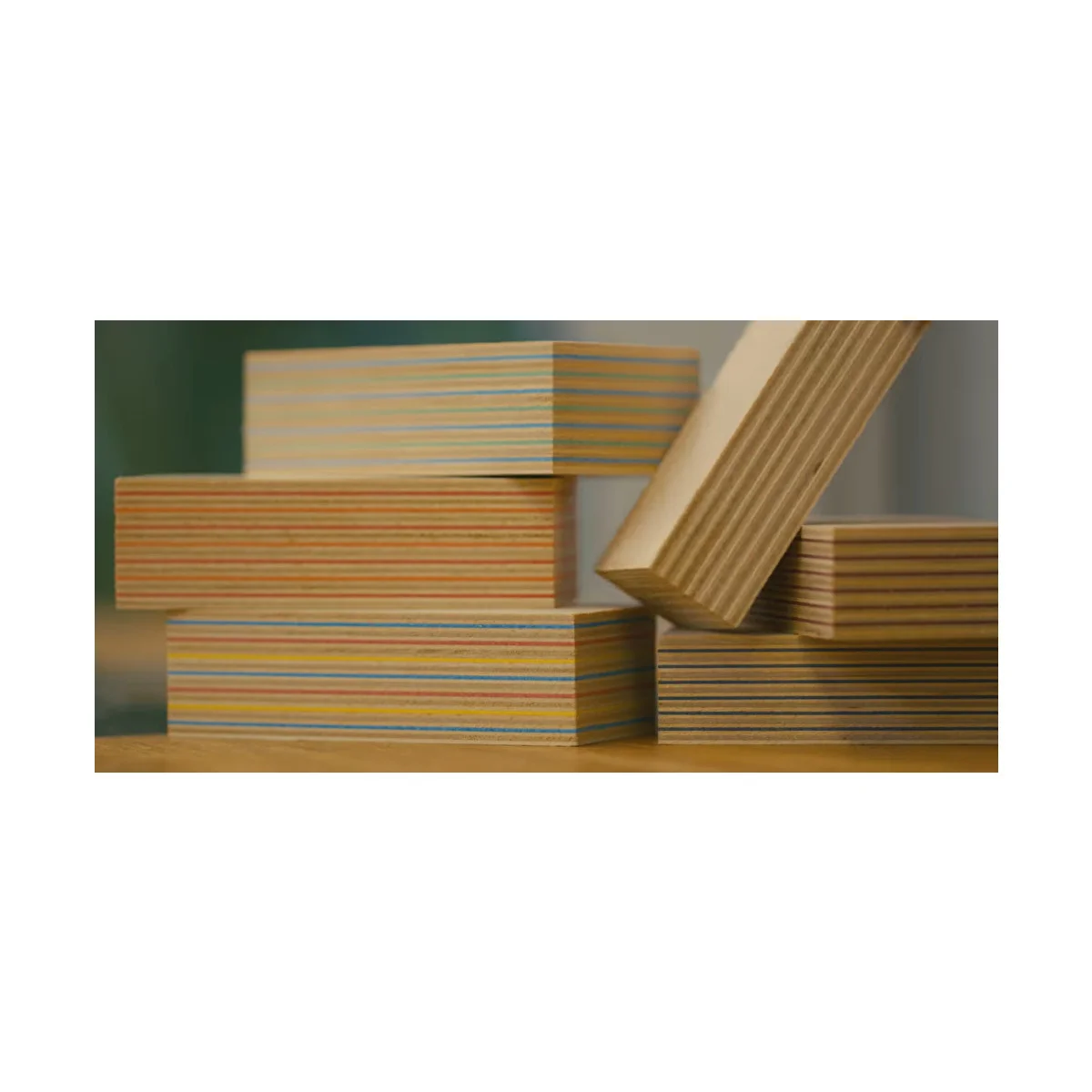
One way we address this is by layering domestic Japanese birch and basswood veneers with recycled colored paper. Thin layers, alternating grain directions and dense paper between them help limit movement. The construction is designed to make the material more dimensionally stable, so it is better able to hold its shape through changing conditions.
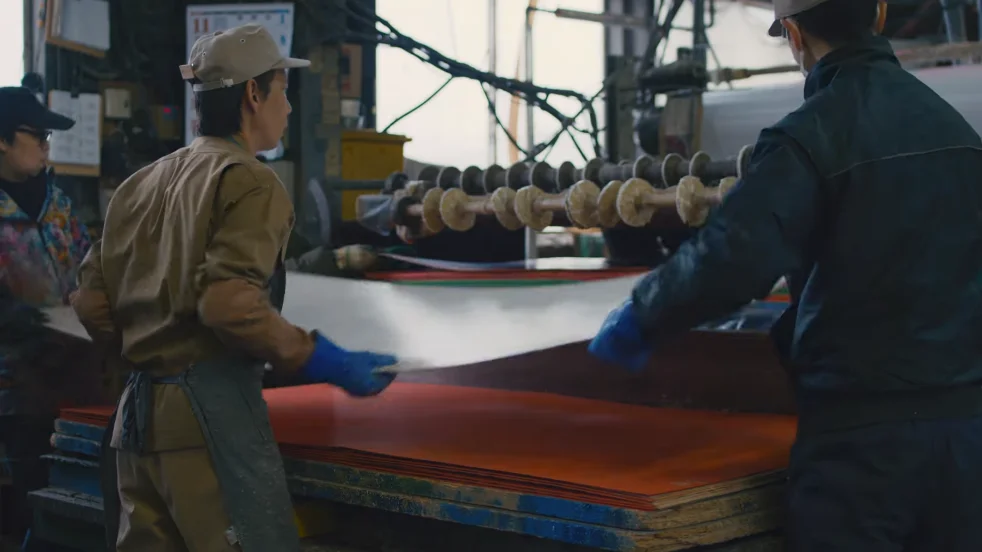
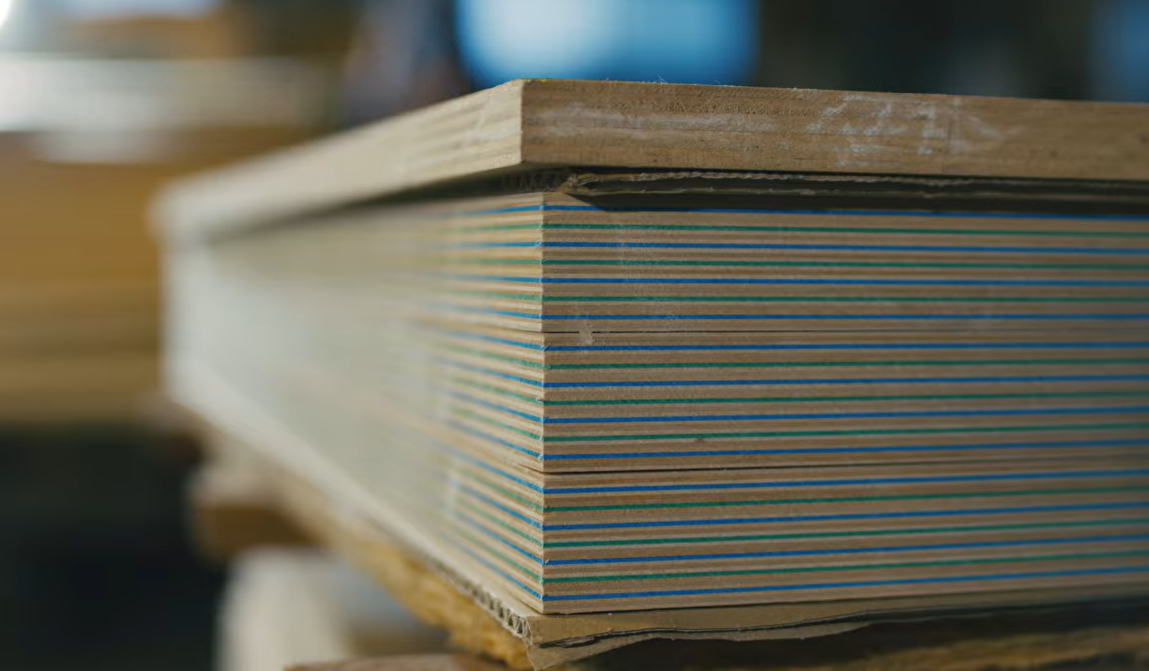
That structure also gives the material its appearance. I founded bosje partly to explore what happens when layered construction is visible instead of hidden under a surface finish. Alternating wood and colored paper form stripes that continue through the material and across its edges and cross-sections. The pattern isn’t printed on top; it comes from the layers themselves.
Keeping an object in use
That distinction connects to a larger question about sustainable design. Recycled content, certifications, carbon figures and end-of-life options can all help describe a material’s environmental qualities. But those measures don’t, on their own, tell us whether someone will want to keep the object made from it.
People often hold onto things because they find them useful and enjoy living with them. That response is difficult to capture in a recycling specification, yet it can shape an object’s useful life. A product that suits its purpose, lasts through everyday use and remains appealing has a better chance of being kept. Its owner may not think of that choice as an environmental act. It may simply feel natural to continue using something that still works and matters to them.
For material design, the practical implications start with stability. If a material is less prone to warping or splitting, the object made from it may be less likely to become unusable for those reasons. Repairability matters too: when a part can be fixed or replaced, the whole object may stay in service. Appearance can play a role alongside these physical qualities. An object with a character people value may be less readily replaced when a newer option appears.
None of this makes recycling irrelevant. Some products are best designed so their materials can be separated and recycled at the end of their useful lives. The question is how that goal fits alongside durability, repair and the experience of using the product. A design brief that begins with easy disassembly may serve its purpose, but it can leave other questions unanswered: Will the object hold up? Can it be repaired? Is it something people want to keep?
Designing beyond the disposal stage
Making a product easy to take apart can support recycling. Yet its value depends partly on what happens before disassembly. If the choices that aid separation also make an object less durable, harder to repair or less suited to its use, the result deserves a closer look. The material’s construction, the way the product is assembled and the demands of its everyday use all shape how long it remains useful.
In the case of layered wood, material stability and visible construction offer one way to think through those priorities together. Alternating grain directions and paper layers help reduce movement, while the same layers create a distinct surface and edge. That does not establish how every product will perform over time; the result depends on the object and how it is used. But it shows how a material’s structure can address practical behavior while also contributing to its design.
My read is that recyclability works best as part of a broader plan for a product’s life, including what happens when continued use is no longer possible. It doesn’t have to answer the first design question. That question might instead be what will help the object remain useful and wanted: appropriate materials, stable construction, repair options and an appearance that people are glad to live with.
Circularity includes what happens after a product is finished, but it also depends on how long it takes to reach that point. Working with wood has taught me to ask what gives people a reason to keep an object. For me, that is a useful place to begin: design for a product’s life in use, then make a thoughtful plan for the materials when that life ends.