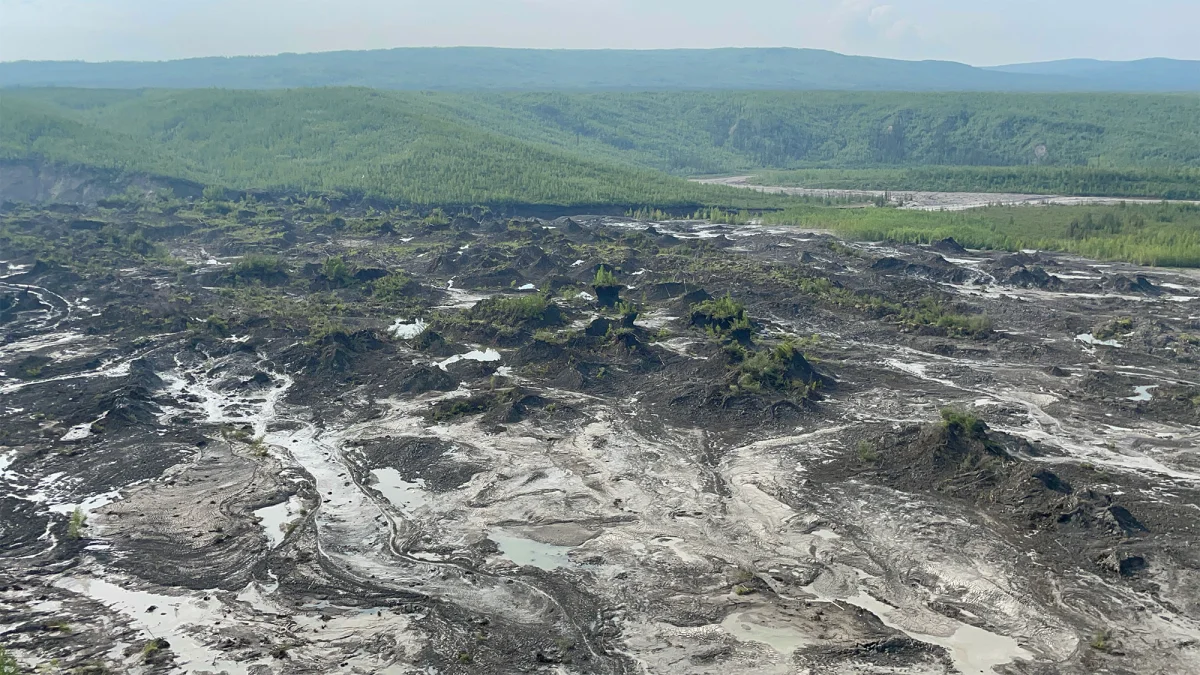
Mandarinfish Show How Coral Rubble Can Shelter Reef Life
Mandarinfish can thrive in coral rubble, but their long-term prospects depend on living reefs. Scientists still lack the data to track their populations.
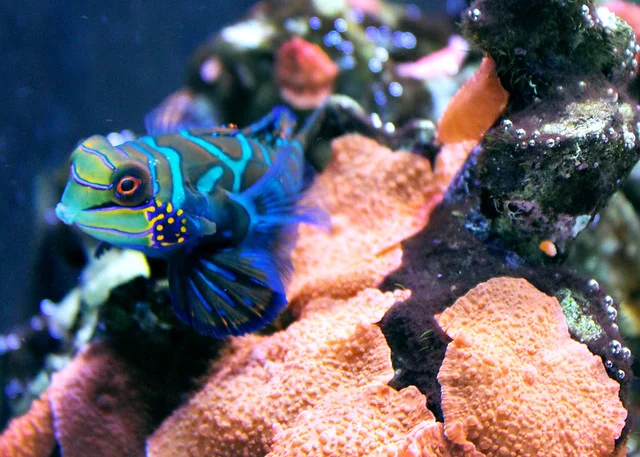
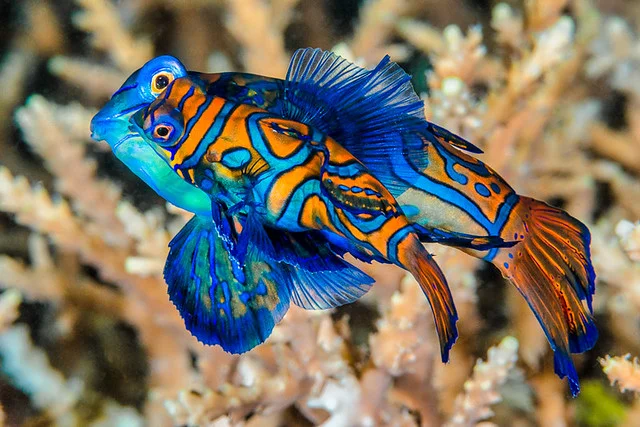
Coral rubble can shelter a fish without securing its future. The mandarinfish, a thumb-length reef species known for its vivid blue, orange and green markings, hunts tiny invertebrates among broken coral. That makes it unusually tolerant of habitat that looks damaged. But the rubble it uses is part of a living system: corals must keep growing to replace reef structures as waves, animals and erosion wear them down.
I saw a mandarinfish in Palau in 2000, two years after a severe global bleaching event had affected reefs across the tropics. At dusk, it slipped between fragments of branching coral, briefly visible as turquoise and orange before vanishing into the maze. I took the encounter as a sign of resilience. Years later, questions to reef scientists led to a less tidy interpretation: the fish can use rubble, but researchers don’t yet know how its populations are changing.
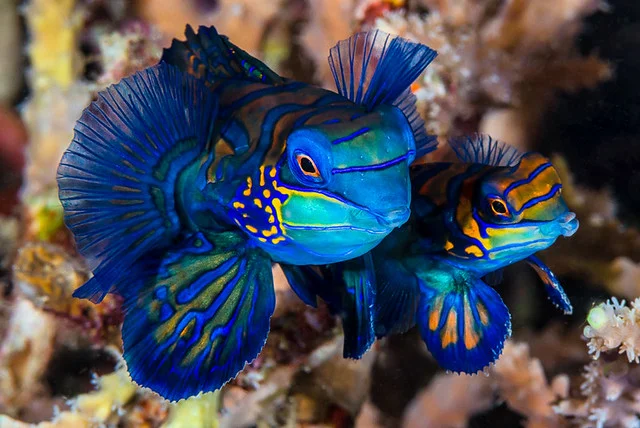
Synchiropus splendidus is a dragonet, a small fish whose bright patterns stand out against the broken coral where it often lives. Mandarinfish spend much of their time tucked into the reef, becoming easier to spot around dusk. For a predator, open water would leave a slow-moving, conspicuous fish exposed. Crevices offer cover, and the small organisms living among coral fragments provide food.
Dragonets such as mandarinfish show why rubble cannot be read as a simple measure of ecological failure. It can be both a product of damage and a habitat with its own value. The key question is whether the reef continues to produce and renew that structure.
Rubble as habitat
Coral frameworks have never been permanent. Storms break colonies; urchins and worms bore into the structure; parrotfish grind coral into sand. New corals can settle among the remains and build upward. A reef is therefore both habitat and a record of earlier growth.
Keoki Stender, a Hawai‘i-based fish expert and underwater photographer, says mandarinfish hide in dead bases of branching coral and deep rubble, where they prey on tiny invertebrates. He has found them in places such as murky harbors and lagoons, including areas with corals that resist bleaching. Such settings may resemble reefs altered by natural processes or human activity, but the fish’s presence alone doesn’t show that a reef is recovering.
Stender is less concerned about mandarinfish than about species that eat living coral or shelter within living colonies. Some butterflyfishes, filefishes, damselfishes, gobies and blennies are more directly exposed when coral dies. Mandarinfish can forage among dead coral, which may buffer them from immediate changes in living coral cover.
Bart Shepherd, senior director of the Steinhart Aquarium at the California Academy of Sciences, also sees no immediate reason for particular concern about the species. The IUCN Red List classifies it as “Least Concern.” Shepherd points to its broad range across the Indo-Pacific and relatively limited collection for aquariums as factors in that assessment.
That status differs from the situation for fish with restricted ranges, such as the Banggai cardinalfish, or species harvested heavily across wide areas, including sharks and food fishes. Yet a broad range doesn’t rule out local pressure. Coral reef scientist Emma Kennedy of the Australian Institute of Marine Science notes reports of declines in the Philippines, but says published evidence is insufficient to establish whether those reports reflect a wider trend.
Kennedy also points to collection as a possible direct pressure in some places, particularly Indonesia and the Philippines. The aquarium trade is described as limited overall in the IUCN assessment, but that broad description may not capture the effect on particular local populations.
A population that’s hard to measure
The largest gap is basic information. Daniela Ceccarelli, who leads fish monitoring work on the Great Barrier Reef for the Australian Institute of Marine Science, says there is very little global data on mandarinfish. Scientists therefore can’t confidently say whether their populations are declining.
The fish’s habits make routine counts difficult. Mandarinfish spend much of their lives within the reef structure and are most visible around dusk. Christopher Fulton, a principal research scientist at the institute, says conventional visual surveys are poorly suited to cryptic species. Reliable estimates may require anesthetic or ichthyocide in small sampling stations.
The habitat that hides mandarinfish from predators also makes them harder for scientists to find and count. That leaves a consequential difference between what is known about the species and what is not: “Least Concern” means the evidence available does not place it in an IUCN threatened category. It does not demonstrate that populations are stable across its range.
Rubble depends on living coral
Mandarinfish use rubble, but they remain part of a coral reef ecosystem. Fulton says mandarinfish and other dragonets in the family Callionymidae occupy rubble patches in and around reefs. Those patches shift and erode: waves move fragments, organisms bore into them, and physical and biological processes gradually break them down. As Fulton puts it, living coral is needed to produce a continuing supply of coral-supported habitat.
Shaun Wilson, a senior research scientist at the Australian Institute of Marine Science, cautions that he knows of no studies that directly examine the relationship between coral cover and mandarinfish. That means a direct effect from changing coral communities shouldn’t be assumed. There may still be longer-term consequences if declining coral growth reduces the supply of rubble.
The connection is indirect but important. Every coral fragment began as a structure built by living coral polyps. A reef may retain usable rubble after coral mortality, giving fish shelter and feeding grounds for a time. If new coral growth and settlement don’t keep pace with erosion, that habitat can diminish. Ceccarelli describes the fish as favoring sediment-rich and rubble habitats while still relying on tropical coral reef ecosystems.
Kennedy makes a similar distinction. Mandarinfish aren’t as dependent on living coral as butterflyfishes that feed on coral polyps. Their diet includes copepods, worms and other small organisms, which they can find among dead coral. That flexibility may soften the immediate effects of coral loss, but it doesn’t make them independent of the reef. Kennedy says continued warming and coral loss will eventually affect all reef-related life to some extent.
Resilience takes time
A single sighting can show that a fish is using a habitat. It can’t tell us whether the habitat will persist, or whether a population is holding steady. A reef damaged by a storm may still have living corals that grow and replenish its structure. A reef facing repeated marine heat waves, poor water quality, disease and algal overgrowth may follow a different path if coral growth and recruitment fall behind erosion.
How quickly such changes could affect mandarinfish, and whether some populations might fare better than others, remain open questions. The researchers I spoke with couldn’t answer them because the necessary population data aren’t available. That uncertainty is central to the story, not a small qualification to a reassuring status label.
My memory of Palau still holds the image of bright color moving through broken coral. The fish wasn’t proof that the reef was healthy, and rubble wasn’t an ecological contradiction. It was habitat available at that moment, built from coral that had lived before and ultimately dependent on coral continuing to grow.
Mandarinfish appear widespread and may tolerate some reef disturbance better than species tied closely to living coral. But resilience isn’t invulnerability. Their long-term prospects depend on a chain of habitat renewal that scientists are only beginning to understand. Clean water and enough time for corals to grow and reproduce matter because the reef’s next generation of inhabitants will need structures that are still being built.

More on coral reefs
I Will Love You to Death: A Divemaster’s View on Coral Tourism
The post What a Reef Fish Taught Me About Life in the Rubble appeared first on The Revelator.