Permafrost Slides Reveal a New Pathway for Arctic Carbon Release
Two vast slides in Canada’s Northwest Territories show how wildfire and thawing permafrost can trigger sudden ground collapse, with emissions still unknown.
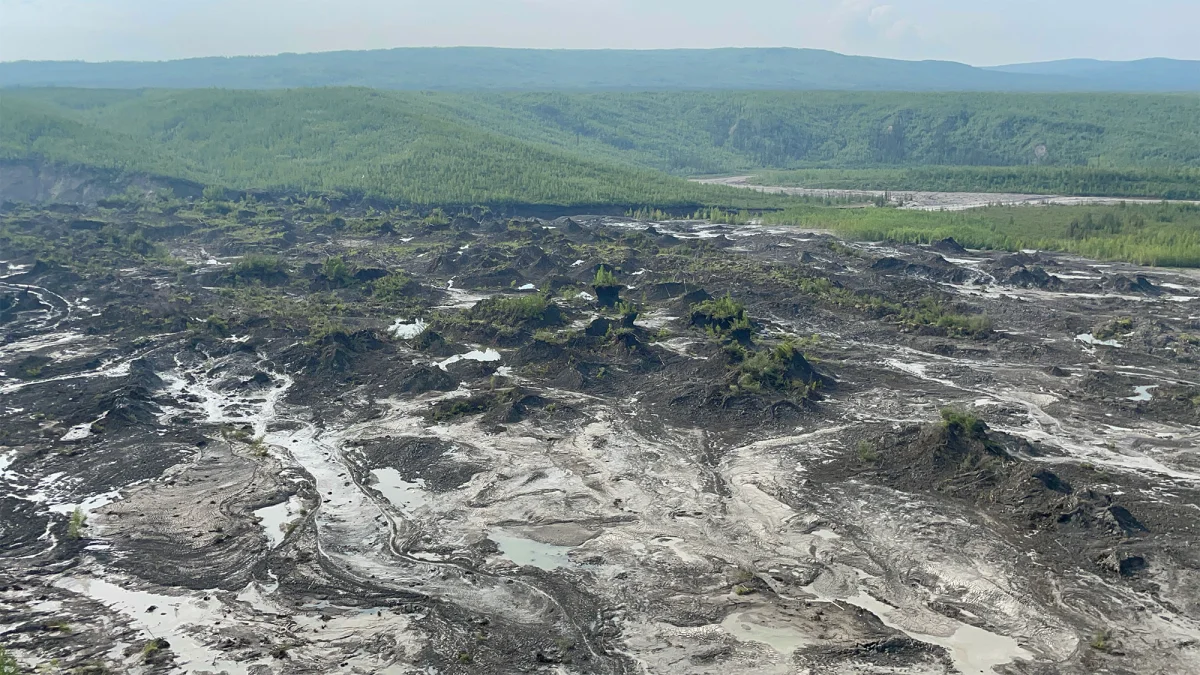
Two enormous landslides in Canada’s Northwest Territories point to a newly identified way that thawing permafrost can reshape Arctic ground. Researchers say the slides began with changes set in motion by a 1995 wildfire, then collapsed in hours or days decades later. Their scale and the frozen material they carried offer clues about how the failures happened, while leaving a major question unanswered: how much greenhouse gas they may release.
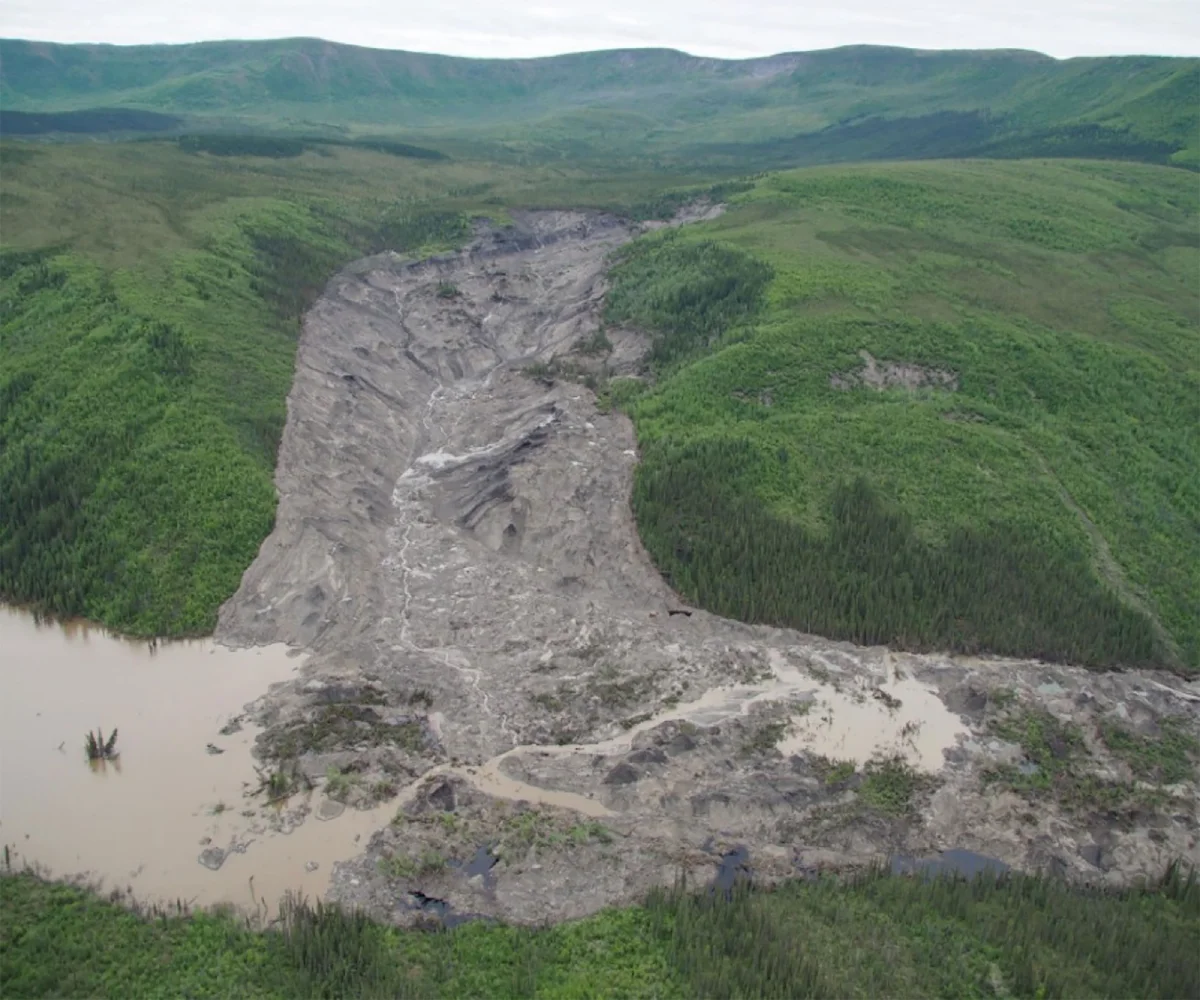
The events occurred along the Johnson River in 2017 and the Redstone River in 2018. In a recent paper, scientists describe one slide extending about three-quarters of a mile and the other about two miles. Together, they shifted 30 million cubic yards of earth. One earlier slide in the region had blocked a river and formed a lake, as CBC reported.
These failures differ from slides driven by heavy rain, which can carry mud and rock downhill in a torrent. In a permafrost detachment slide, frozen ground degrades and a large mass of soil and ice breaks away. The researchers found blocks of frozen material as long as 650 feet within the slide areas. That evidence suggests the ground failed from beneath, rather than gradually thawing from the surface into mud.
Permafrost is ground that stays frozen for at least two years. It can contain ice, dead plants, soil, rock and sand. Across the Northern Hemisphere, these frozen zones cover an area two and a half times the size of the continental United States. The Arctic is warming four times faster than the rest of the planet, and thaw is already causing abrupt ground collapse, including large depressions known as thermokarst. As microbes consume thawed organic matter, they release greenhouse gases; permafrost carbon emissions remain a major uncertainty.
The two Northwest Territories slides add a different kind of collapse to that picture. David Olefeldt, a soil scientist at the University of Alberta who did not take part in the study, described them as a newly observed form of thermokarst: land failure caused by permafrost thaw. Lead author Joseph Young, who conducted the work while at the university, said the features have appeared only in the past 10 to 15 years and represent a sharp change.
How a decades-old fire set the stage
The chain of events started when a wildfire swept through the area in 1995. Vegetation normally shades the ground during northern summer, helping keep permafrost cool. After the fire removed that cover, the ground lost part of its thermal protection. Young said the warming signal from a burned forest can take roughly 20 years to reach the base of the permafrost, where it may still be slight.
Researchers think that gradual warming weakened the frozen ground from below. Cracks spread as the base warmed, while pools of comparatively warm surface water seeped into the permafrost and accelerated its breakdown. The unstable mass crept downhill by a few feet a year, eventually reaching a rate that may have approached 80 feet annually before it suddenly gave way.
Permafrost geophysicist Vladimir E. Romanovsky, professor emeritus at the University of Alaska Fairbanks, said friction and cracking along the base can add energy to the movement. He compared the sudden acceleration to surging glaciers, which can speed up as they flow downhill. The comparison helps explain how slow weakening can precede a rapid failure.
The large frozen blocks found at the sites also help distinguish the process from thaw that begins at the surface. If the slide material had instead been mostly mud, that might have pointed to a surface layer that gradually thawed into mush. The evidence gives researchers a way to investigate the sequence, though the mechanics and conditions behind these slides still need study.
Collapse can leave more ground exposed
The initial failure may also create conditions for further thaw. The displaced earth left walls of permafrost exposed to sunlight. Young said that a large detachment can open up additional areas where future failures are possible, so the first collapse does not necessarily mark the end of the disturbance.
The broader climate consequences remain difficult to quantify. As thaw exposes buried organic material, microbes can break it down and release greenhouse gases, potentially adding to warming that then drives further thaw. Miriam Jones, a research geologist who studies permafrost at the United States Geological Survey and was not involved in the paper, called this feedback a major global concern.
Other northern changes may compound the pressure on frozen ground. Shrubs and trees are spreading north by miles per decade, a shift known as Arctic greening. In some places, shrubs trap snow that insulates the ground from winter cold. More vegetation can also provide fuel for the fires that remove the permafrost’s summer shade. Northern fires may burn through peat, where carbon has accumulated over centuries, and some can smolder underground through winter before reappearing in spring. Research has also linked permafrost thaw to methane release, while the changing plant cover can affect how much carbon the ground stores or emits.
How much carbon these slides release is not yet known. Young said researchers have not measured or classified emissions from this type of feature, though the size of the failures could make their contribution substantial. Earlier work suggests that even smaller episodes of abrupt thaw can produce significant carbon emissions. Olefeldt expects researchers may find other surprises as vulnerable regions cross thresholds for collapse.
For now, the slides show why the pace and form of permafrost thaw matter alongside the area affected. A long delay between a fire and ground failure can hide the connection, and a sudden collapse can expose more frozen material to sunlight and microbial activity. Measuring emissions and tracking whether similar failures emerge elsewhere will help clarify how much this newly described process adds to Arctic carbon release.
This story was originally published by Grist with the headline Strange, catastrophic landslides are kicking off across the far north on Oct 30, 2026.
===