Hitachi Property Uses Washable Paper Bags to Bring Circular Economy into Daily Life
A durable bag for condominium paperwork is giving customers and employees a practical way to engage with material choices and environmental awareness.
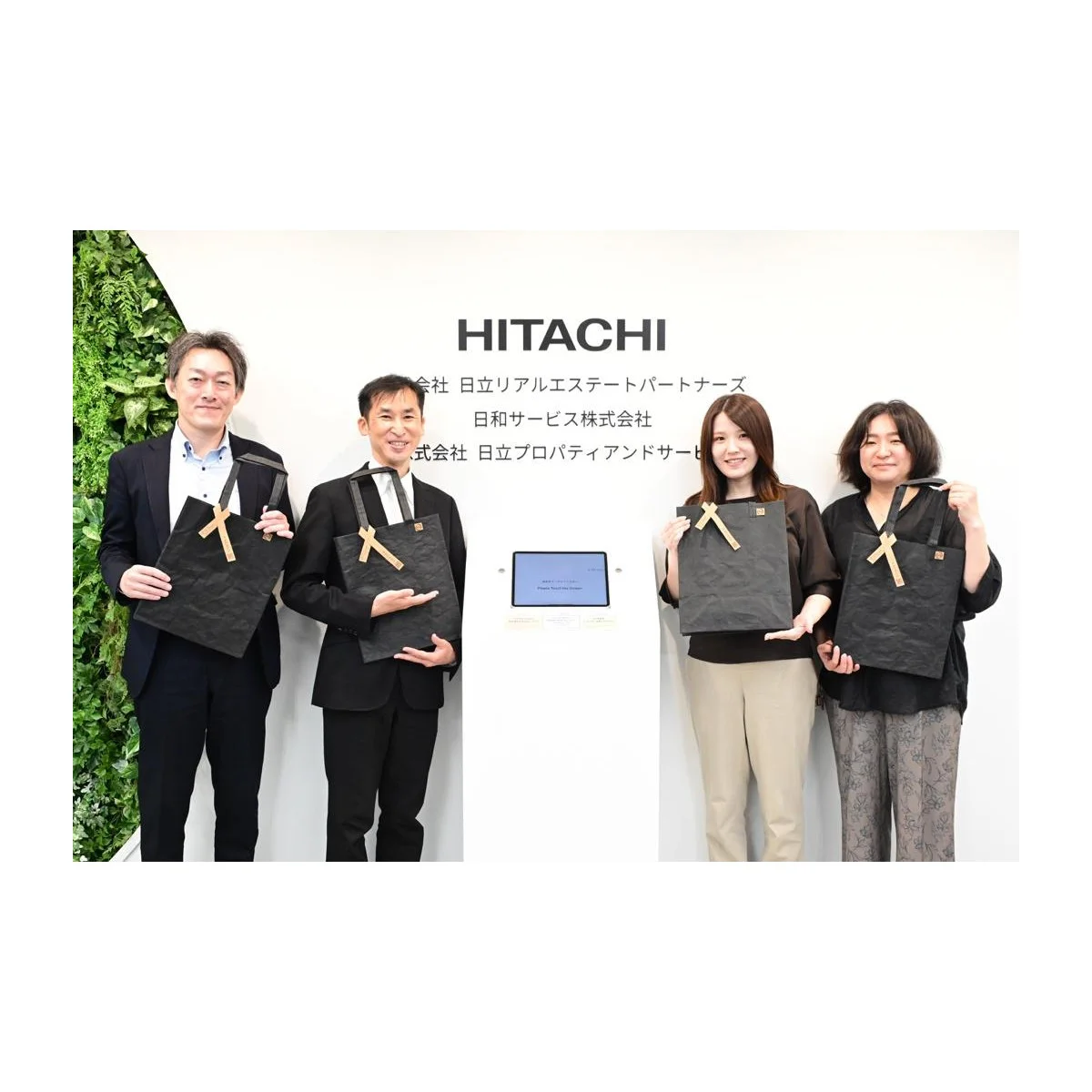
A bag for carrying condominium paperwork has become a way for Hitachi Property and Service to put environmental awareness in customers’ hands. Since 2026, the Japanese real estate company has given new condominium buyers totes made from washable paper derived from thinned timber. Employees received the same bags as part of an effort to make circular economy ideas more tangible inside the company.
The initiative grew from a project launched in early 2024. Its practical focus matters: a bag is useful, visible and likely to be handled repeatedly, giving the company a way to connect an environmental message with an ordinary task. The project team also wanted customers to notice that material choices can be part of how a business approaches environmental issues.
Choosing an object customers would use
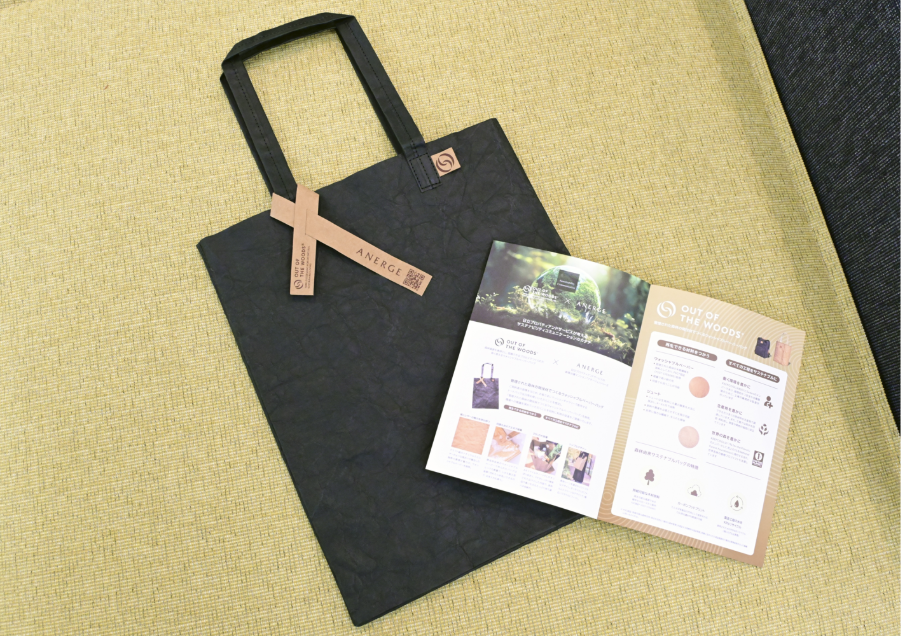
Project member Kazuki Ogura says the team first considered service-based approaches to promoting a circular economy. It eventually chose to make a physical product, settling on bags made with OUT OF THE WOODS® washable paper. The material’s timber origin and the company’s real estate work with forest resources also gave the team a reason to raise awareness of forest-related environmental issues among employees.
For the condominium business, the bag had to do more than carry a message. Buyers receive a substantial volume of property paperwork, so the team needed an item durable enough for that use. Atsuhito Yasukawa also points to its understated appearance: it did not look inexpensive and could sit comfortably alongside the condominium’s branding.
That combination of practical use and considered design shaped the project’s approach. The bag could serve a clear function while giving customers a small prompt to think about the materials around them. The team’s stated aim was to show how the company thinks about environmental issues that people can encounter in everyday life, and to communicate its commitment through small actions.
Yuka Akagi, who handed the bags to customers, recalls one response in particular: “It's amazing to see how seriously Hitachi is approaching these initiatives. It's just like Hitachi to pay attention even to the materials used for its eco-bags.” The comment suggested that the choice of material registered with at least one buyer as a sign of the company’s wider environmental attention.
Akagi also describes a more challenging reaction within herself. The customer’s praise made her consider whether the company was as environmentally conscious as people believed, and whether its actions were actually good for the environment. That question points to a useful distinction: an item can communicate intent, while assessing environmental results requires looking beyond the message itself.
Awareness does not guarantee changed habits
The company used distribution of the bags to employees as an opportunity to learn about environmental awareness and behavior. Team members could handle the material and use the bags themselves, while a survey asked about familiarity with the circular economy, environmentally conscious behavior and purchasing environmentally conscious products.
Ogura reports that nearly half of respondents said they were familiar with the circular economy. For the questions about behavior and purchases, more employees selected “neither” than answered affirmatively. The findings suggest a gap between knowing about environmental issues and acting on that knowledge in daily choices.
The survey does not establish why that gap exists, or measure whether receiving a bag changed anyone’s habits. It does, however, give the team a starting point for understanding how awareness and action differ among employees. Familiarity with a concept can coexist with uncertainty about what to do, limited opportunities to act, or habits that are hard to change. The source offers no breakdown of those possible factors, so the survey is best read as an initial indication rather than a measure of impact.
A practical object may help keep the subject in view, but its effect depends on what people do with it and what follows. In this case, the team sees everyday use as a way to make environmental issues easier to discuss and to connect an abstract idea such as circularity with a material people can touch. The bag’s role is therefore both functional and communicative.
A starting point for further engagement
Ayaka Tabira says some employees in their 20s and 30s clearly reported that they were already taking environmentally conscious action. The results also led the team to see potential for further change. The source does not provide survey totals, question wording beyond the examples, or results by age group, so it is not possible to quantify how behavior differed between generations. The responses do show that employees’ experiences are not uniform.
For a property company, the initiative connects everyday purchasing and use with a broader conversation about resources. Choosing a bag made from thinned timber-derived paper makes the source material part of that conversation; giving it to buyers and staff creates opportunities to discuss environmental choices in a familiar setting. The available information does not compare the bag’s full environmental footprint with alternatives, so the project’s reported value lies in its material choice, usefulness and role in raising awareness.
Hitachi Property and Service describes the effort as a way for customers and employees to think about environmental issues and take action close to daily life. Its next measure of progress will be whether that attention grows into sustained choices and practices. For now, the project offers a modest but concrete entry point: a useful bag that brings questions about materials and behavior into ordinary routines.
Related links
- Hitachi Property and Service, Ltd.: https://www.hitachi-property.co.jp/
- OUT OF THE WOODS® washable paper bag: https://www.pipeline.jp/oot/