Industrial Surplus Reuse Can Cut Emissions From Replacement Manufacturing
Keeping usable equipment in service can preserve its remaining value and reduce demand for new manufacturing, a major source of machinery emissions.

When a manufacturer scraps usable surplus equipment, the emissions from making it remain in the atmosphere, while its remaining working life is lost. If another business then buys a new replacement, producing that machine adds another round of emissions. Reuse can break that cycle by keeping existing equipment productive for longer.
That makes surplus management relevant to industrial decarbonization as well as asset recovery. The potential benefit depends on whether reused equipment meets a real need and takes the place of newly made equipment. When it does, a company can preserve value already invested in a machine and reduce demand for the materials, processing and factory work behind a replacement.
Manufacturing emissions are already part of the asset
Embodied carbon describes emissions generated before equipment begins operating. For industrial machinery, that includes the production of materials and components, machining and assembly, and transportation. Steel must be produced; copper and other materials must be refined; parts must be made and brought together into a finished machine.
Those emissions have occurred by the time the equipment arrives at a facility. Scrapping the machine cannot reverse them. It can, however, shorten the period over which the equipment provides useful service, leaving less productive work to show for the resources and energy used to make it.
Recycling can recover some of the materials in scrapped machinery, but it does not keep the finished asset intact or preserve its remaining working life. Reuse holds on to more of what has already been made: the complete equipment, its assembled components and the production effort invested in it.
Premature scrapping can prompt another production cycle
The climate effect of scrapping usable equipment can extend beyond the lost service life of the original asset. If a business still needs that type of machinery, it may buy a new unit. Manufacturing the replacement requires another sequence of material extraction, processing, component production, assembly and transport.
Consider an industrial pump that is surplus at one site but still usable. If it goes to scrap while another manufacturer needs a pump, the second business may order a new one. A sale or redeployment could instead put the existing unit to work, potentially avoiding the need to manufacture and deliver another pump.
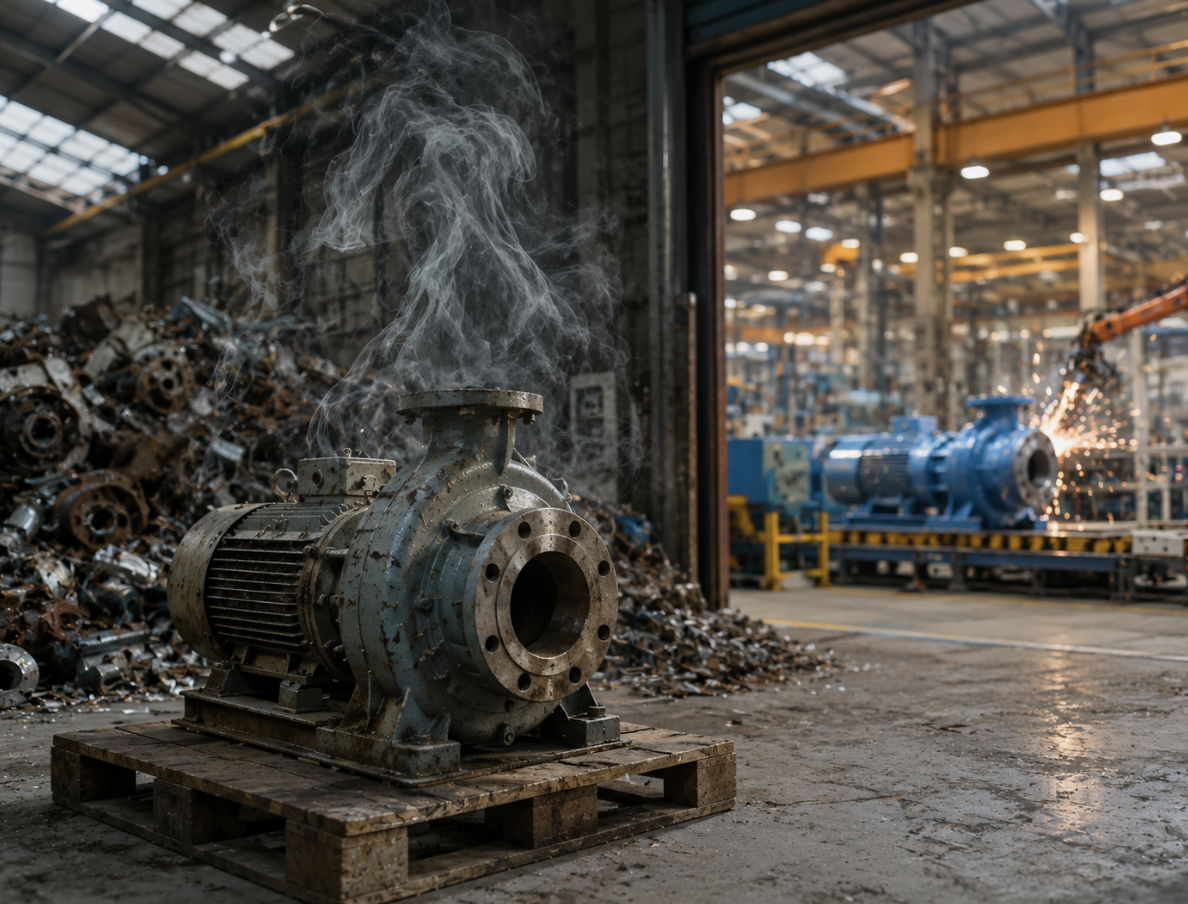
The key condition is substitution: reuse can reduce production emissions when the existing asset satisfies a need that would otherwise be met by new equipment. Reuse does not guarantee that outcome in every case. The article’s example shows why companies need to consider whether surplus machinery is functional and suitable for another application before treating scrap as the default destination.
Machinery supply chains account for much of the footprint
A U.S. Department of Energy analysis estimated that the cradle-to-gate footprint of U.S. machinery products was about 78 million metric tons of CO2e in 2018. Roughly 81% of those embodied emissions came from upstream supply-chain activities.
Cradle-to-gate accounting captures emissions from production up to the point when a product leaves manufacturing. The estimate highlights why decisions about existing machinery can matter beyond a factory’s own operations: producing equipment draws on materials and processes across its supply chain. If reuse displaces new production, some of the emissions associated with those upstream activities may be avoided.
The estimate describes machinery products as a whole, rather than the emissions avoided by reusing any particular pump or asset. The source does not provide a per-machine savings figure. The practical case is therefore strongest when companies track which equipment is reused, what purchase it replaces and how long the asset remains in service.
Account for avoided emissions separately
Companies may be able to describe avoided production emissions as part of their sustainability reporting, but they should keep the accounting categories clear. Under GHG Protocol guidance, avoided emissions are reported separately from Scope 1, Scope 2 and Scope 3 inventories. They should not be subtracted from those inventory totals.
That distinction helps readers understand what the figures represent. An emissions inventory records emissions within defined scopes; an avoided-emissions estimate describes a possible difference between what happened and a comparison scenario, such as manufacturing a new replacement. Because the comparison depends on what the buyer would otherwise have done, companies should explain the basis for their estimates.
Reuse can support asset recovery, too
Putting surplus machinery to use can have a business benefit alongside the potential emissions reduction. Managing surplus inventory may allow a company to resell idle equipment, redeploy it to another facility or reduce the need for a new purchase. Moving equipment out of storage can also free space and lower the costs of holding unused assets.
These benefits depend on the asset and the receiving business. The equipment needs to be usable and a good fit for the task. When it is, the same decision can recover value and reduce demand for new manufacturing. That link gives manufacturers a practical place to examine the climate effects of routine asset decisions: identify usable surplus, look for a suitable next use, and record whether reuse displaced a new purchase.
Extending equipment life cannot undo its manufacturing emissions, and the source provides no single emissions figure for reuse. It can help a machine deliver more service from the materials and production already invested in it. Across a large surplus portfolio, prioritizing suitable reuse can preserve asset value while limiting the need for replacement manufacturing.