15 New Environmental Books on Wildlife, Climate and Nature
These new books explore threatened rivers and kelp forests, wildlife research, natural history and ways to notice environmental change.
From rivers with unusual natural histories to kelp forests under pressure from warmer oceans, this collection of new books connects close observation of nature with questions about how people understand and affect the living world. The titles range from illustrated guides for young readers to field accounts, science writing and books examining how corporate messaging has shaped public understanding of environmental risks.
The list includes 15 books for readers of different ages and interests. The descriptions below highlight what each book covers; titles link to publisher or bookseller pages, where available. Readers can also look for them through local bookshops and libraries.
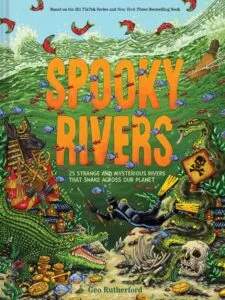
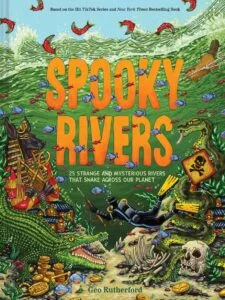
Spooky Rivers: 25 Strange and Mysterious Rivers That Snake Across Our Planet
By Geo Rutherford
Geo Rutherford’s nonfiction tour follows 25 rivers through natural oddities, scientific questions, historical episodes and the myths attached to their waters. Some rivers sustain communities; others have caused destruction, and many have done both. The book ranges from whirlpools and submerged settlements to rivers that burn, boil, run underground or seem to disappear. It also draws attention to waterways increasingly threatened by climate change.
That mix of physical processes and human stories makes rivers more than a backdrop. They shape where people live and how they travel, while their unpredictable behavior can bring both benefits and risks. Rutherford’s selection offers younger and older readers a way into the variety of river systems—and the pressures they face.
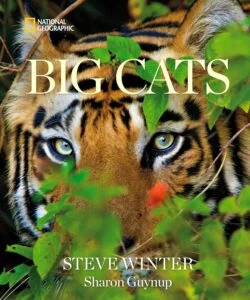
Big Cats
By Steve Winter and Sharon Guynup
Photographer Steve Winter and environmental journalist Sharon Guynup take readers behind the images Winter has made during a career spent documenting large cats around the world. His subjects include jaguars in Brazil’s Pantanal and snow leopards in the Himalayas. The book’s chapters cover cougars, jaguars, leopards, snow leopards, tigers and lions, combining photographs with accounts of the work behind them.
The book also considers how Winter’s photographs have supported conservation efforts. Its appeal doesn’t depend on specialist knowledge: readers can encounter the animals through their lives and behavior, while seeing how images can help bring attention to species and their protection.
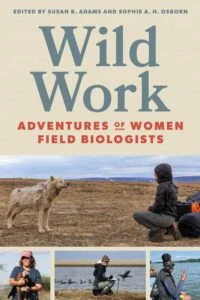
Wild Work: Adventures of Women Field Biologists
By Sophie A. H. Osborn and Susan B. Adams
More than 40 first-person stories from 37 women field biologists bring readers into work with wolves, condors, bats, bears, fish and other wildlife. The accounts range across field research and conservation, showing the practical demands and personal experiences behind studies of animals in the wild.
Some stories involve tagging wolves, handling foxes or wading through waters where venomous snakes live; others describe the hazards of working in places where poachers pose a threat. The contributors also write about balancing fieldwork with family life, forming lasting friendships and building connections with the natural world. The collection puts women’s experiences in wildlife science at the center, an area of work whose stories have often received little attention in books.

The Nerd Reich: Silicon Valley Fascism and the War on Democracy
By Gil Durán
Gil Durán examines the ideas and ambitions of powerful technology figures who argue that innovation can justify upheaval in public life. He traces the book’s central argument to the influence of The Sovereign Individual, by James Dale Davidson and Lord William Rees-Mogg, and profiles Peter Thiel, Marc Andreessen, Balaji Srinivasan and Elon Musk.
Durán focuses on how technology, cryptocurrency, artificial intelligence and social media shape this movement’s reach. He argues that the promise of personal freedom through technology can also support a society organized around private power and unequal access. The book is a warning about the consequences of concentrating influence in the hands of wealthy technology leaders, and asks readers to scrutinize who benefits when innovation is presented as a reason to accept disruption.

Profiles in Cowardice: A Study of Collaboration in the Trump Era
By Jacob Weisberg
Jacob Weisberg’s book examines how people with access to wealth and influence can help authoritarianism take root within an open society. Its focus is a network of eight individuals linked to major technology firms, financial institutions, large corporations and the U.S. Congress. Weisberg’s account argues that powerful institutions can be weakened when their leaders bend to pressure instead of defending their independence.
The book looks at why so few people resisted during the period it covers, and what that response reveals about leadership and the exercise of power. Its bitter humor gives the analysis a pointed tone, while the central question reaches beyond the individuals profiled: what happens to public institutions when those entrusted with them decide that access and influence matter more than their responsibilities?

We’ve Been Here the Whole Time! A Not So Sacred Guide to All Things Native America
By Joey Clift
Foreword by Shane Hawk; illustrated by Julie Fiveash
Comedian Joey Clift, a member of the Cowlitz Nation, offers a humorous introduction to Native American history, people and culture. Diné artist Julie Fiveash illustrates the book in a style that combines textbook and notebook, while Clift takes on misconceptions and questions that shape how Native people are represented.
Topics include Pocahontas, sports mascots, ancestry claims and the Land Back movement. The irreverent approach is intended to make difficult or overlooked subjects approachable, with material for history enthusiasts, teachers and comedy readers. Its underlying point is direct: Native people and cultures are present, varied and too often missing from what students are taught.

Brought to You By: How Corporations Warped the Truth, Conned the Public, and Broke Democracy
By Amy Westervelt
Investigative reporter and Drilled podcast host Amy Westervelt traces how corporations have shaped public understanding of science and risk. She connects familiar examples—from tobacco companies’ claims about cigarettes to drug firms suppressing studies and oil companies misleading the public about climate change—to a wider system designed to sow doubt and avoid responsibility.
Westervelt describes an apparatus built over the past century: think tanks, lobbyists, university laboratories with corporate sponsorship and media outlets willing to carry industry messaging. Her argument is that these efforts have affected more than particular debates. By making well-supported findings appear uncertain, corporate influence can distort the information people use to judge environmental and health risks. The book asks why those tactics remain effective and how they have helped shape the public’s sense of what counts as truth.
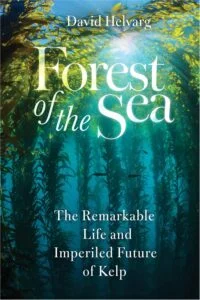
Forest of the Sea: The Remarkable Life and Imperiled Future of Kelp
By David Helvarg
David Helvarg turns attention to kelp forests, underwater habitats that have developed over millions of years and now face pressure from warming oceans. Hidden below the surface along cold-water coastlines, they support a rich range of marine life, including sharks, otters, eels, sea stars, crabs and rockfish.
Kelp forests also matter to coastal communities whose livelihoods depend on the sea. Their decline can therefore affect both marine ecosystems and people connected to them. Helvarg contrasts their relative invisibility with the public attention given to tropical coral reefs, despite the ecological importance of both habitats. The book raises a practical question: what can prevent struggling kelp ecosystems from turning into urchin barrens, where dense sea urchin populations leave little living kelp?
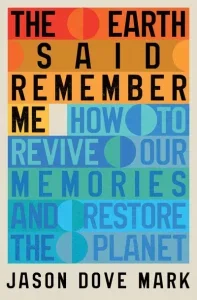 The Earth Said Remember Me: How to Revive Our Memories and Restore the Planet
By Jason Dove Mark
Jason Dove Mark writes about a less visible obstacle to environmental action: people’s capacity to become accustomed to gradual change. As heat intensifies and biodiversity declines, memories of earlier conditions can fade. Scientists call this “shifting baseline syndrome”—the process by which each generation can come to treat the environmental conditions it experiences as normal, even as those conditions differ from the past.
The book is framed as both a call to action and a guide to resisting that loss of perspective. Its central idea is practical: remembering what ecosystems and seasons were like can help people recognize how much has changed. The account links personal memory with environmental restoration, asking readers to pay attention to what is disappearing before a diminished baseline becomes the only one they know.
Books for younger readers—and curious adults

Beatrix Potter’s Botanical: The Art of Flowers and Fungi
By Marta McDowell
Marta McDowell presents 65 plants and fungi studied and illustrated by Beatrix Potter. The collection pairs Potter’s pencil and watercolor work with accounts of the plants’ place in her gardens and their appearance in her writing. It offers a fresh view of a familiar illustrator as a botanical artist and an observant student of the natural world.
For each specimen, readers can connect careful visual detail with the stories and settings that shaped Potter’s life and work. The book brings art and natural history together, showing how sustained attention to plants can inform both creative practice and scientific curiosity.
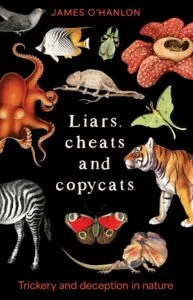
Liars, Cheats, and Copycats: Trickery and Deception in Nature
By James O’Hanlon
Biologist James O’Hanlon explains how deception helps plants and animals survive. A praying mantis can resemble a pink flower; an assassin bug can imitate the vibrations of a spider’s web to attract prey; and a cuttlefish can change its colors in ways that conceal its mating intentions.
These examples lead into the science of camouflage, mimicry and masquerade. The book takes readers from tropical forests to deep ocean habitats to show how organisms hide from predators, lure food and find mates. Its lively premise opens onto a serious lesson in adaptation: the appearances of plants and animals often serve a purpose shaped by the demands of their environment.
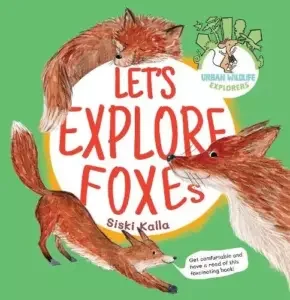
Let’s Explore Foxes: An Urban Wildlife Explorers Book
By Siski Kalla
Siski Kalla’s guide introduces children to foxes, a familiar urban animal that can still be difficult to understand. Part of the Urban Wildlife Explorer series, it combines science, watercolor illustrations and humor with advice for observing local wildlife safely and helping to protect it.
The book is designed for home or school and gives young readers a way to connect what they see in their neighborhoods with animal behavior and habitat. Its practical guidance encourages curiosity while helping children understand that watching wildlife calls for care and respect.
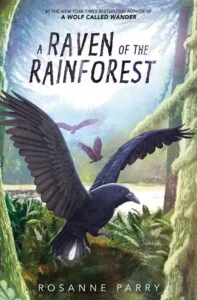
A Raven of the Rainforest
By Rosanne Parry
Rosanne Parry adds a new standalone story to her Voice of the Wilderness series, which includes A Wolf Called Wander, A Whale of the Wild, A Horse Named Sky and A Wolf Called Fire. Its central character, Westerly, is a raven whose single white feather sets her apart from her siblings.
The roost’s story keeper says Westerly is destined to save the other ravens from danger, but she doubts that future and leaves home. When a rare volcanic eruption forces her to flee, she has to turn back toward the place she left. The story follows her uncertainty and changing sense of responsibility through a landscape shaped by volcanic upheaval.
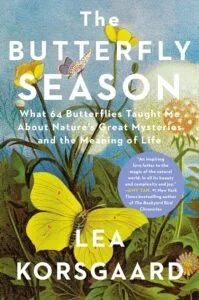
The Butterfly Season: What 64 Butterflies Taught Me About Nature’s Great Mysteries and the Meaning of Life
By Lea Korsgaard
Lea Korsgaard sets herself the task of seeing all 64 butterfly species native to Denmark in a single year. Her account combines field observations with philosophy, science and myth, accompanied by 64 hand-drawn illustrations. Meadows, marshes and old coastal landscapes become settings for a year of watching and learning.
The book’s seasonal structure makes close observation its organizing idea. Each encounter offers a new opportunity to consider how insects fit into the wider natural world, while Korsgaard reflects on the meanings people draw from nature. The result moves between field diary and personal essay, inviting readers to look more closely at the species around them.

The Science of History: Ingenious Inventions From the Ancient Romans to Pirates, Vikings, Cowboys, Samurai, and More
By Mark Brake and Benjamin Bryant
Mark Brake and Benjamin Bryant explore the science and practical knowledge developed by people across different times and cultures. Their examples span early Mesopotamia and the Stone Age, Greece and Rome, Vikings, samurai, pirates, cowboys and other communities. The book shows how observation of nature led to tools and techniques that helped people navigate, grow food, make materials and shape their surroundings.
Topics include terraced farming in the Andes and China, Roman concrete, Stonehenge, samurai land stewardship and armor making, Viking herbalism and the pirate compass. Short features, lists and text boxes make the book easy to browse, while its examples challenge the assumption that earlier societies lacked sophisticated scientific knowledge. It presents ingenuity as a long human tradition, built through practical experiments and close attention to the natural world.

More environmental book recommendations are collected in the “Revelator Reads” archives. Readers can share what they’re reading at comments@therevelator.org.

The post New Environmental Books to Inspire Your Autumn appeared first on The Revelator.