The Dodo’s Extinction Shows Why Island Biodiversity Remains at Risk
From Mauritius to the Caribbean, island extinctions reveal how human pressures have accelerated—and why extinction counts miss part of the damage.
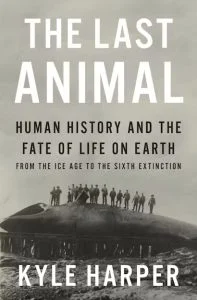
Adapted from Chapter 5 of The Last Animal: Human History and the Fate of Life on Earth From the Ice Age to the Sixth Extinction (Princeton University Press).
 The dodo has become shorthand for inevitable disappearance, but that familiar image hides a more revealing story. Its extinction on Mauritius was part of a broad ecological upheaval, and the losses on islands show how human activity can rapidly dismantle communities shaped by isolation over geological time. They also complicate the usual way of measuring biodiversity decline: a tally of extinctions alone can obscure both the long history of human impacts and the damage short of extinction.
Charles Dickens helped make the dodo a cultural symbol. In 1852, he used the phrase “as dead as the Dodo” to describe a forgotten naval admiral. The expression caught on shortly before Charles Darwin’s On the Origin of Species drew attention to how species begin and disappear. Lewis Carroll’s Alice’s Adventures in Wonderland, published in 1865, then presented the bird as a comic figure. In popular memory, it became an emblem of obsolescence: to go the way of the dodo was to vanish for good.
The real bird was neither an evolutionary mistake nor simply a hapless curiosity. The dodo (Raphus cucullatus) was a flightless relative of pigeons and doves that lived on Mauritius, in the Indian Ocean’s Mascarene archipelago. It had a long, colorful bill and ate fruit, and perhaps small crabs. Mauritius had no native mammals apart from a bat, so birds, reptiles and crabs filled ecological roles that mammals occupy elsewhere. The dodo was a large bird adapted to that particular world. Before people arrived, it thrived.
Mauritius became a record of rapid ecological change
Portuguese sailors first reached Mauritius around 1507. The island’s subsequent history was closely observed by European visitors, who recorded the effects of forest clearance and the loss of wildlife. As ecologists Anthony Cheke and Julian Hume have remarked, the islands’ “despoilers took good notes.” Those records helped make the Mascarenes an early focus of concern about human effects on nature. Historian Richard Grove described Mauritius as having “a disproportionate significance in the history of European colonial environmental policy.”
The exact end of the dodo is uncertain. The last reliable observation dates to the 1630s, though the species may have persisted for several decades longer. Its disappearance likely had no single cause. Farms removed habitat, introduced animals ate eggs, and people hunted the birds. The combination matters: ecological upheaval can expose a species to several pressures at once, making it difficult to assign its loss to one factor.
The dodo’s decline coincided with a wider arrival of unfamiliar animals across the Mascarenes. More than 17 mammal species, about three dozen birds, over a dozen reptiles, several frogs and numerous invertebrates were introduced. Among them was the predatory rosy wolf snail. Pigs spread through the islands, rats consumed birds and eggs, and crab-eating macaques, native to Southeast Asia, preyed on endemic wildlife. The consequences extended beyond the dodo. More than 50 species have disappeared from the archipelago since the first Portuguese ships reached its shores.
Isolation creates distinctive species—and vulnerability
Island life follows different evolutionary conditions depending on how an island formed. Oceanic islands, such as Mauritius and Hawaii, generally emerged through volcanic activity, though some arose through uplift. Continental islands are separated pieces of larger landmasses, like the British Isles. They begin with a sample of the continent’s plants and animals. Oceanic islands, by contrast, are colonized across barriers that limit which species can reach them.
Over time, separation pushes island populations along their own evolutionary paths. With fewer predators and less competition, traits that would be disadvantageous elsewhere can persist or flourish. Flightlessness in birds is one example. Island species also develop relationships with the other organisms around them, forming distinctive communities. As naturalist David Quammen put it, island biogeography is “a catalogue of quirks and superlatives.” A substantial share of the world’s species diversity evolved on islands.
That distinctiveness comes with exposure to shocks. Island populations are often small, and species may lack the defenses that help mainland animals cope with predators, parasites and disease. Isolation has allowed unusual forms of life to evolve, but it can also leave them poorly prepared for unfamiliar threats. People, ships and introduced animals connect places that were once separated. When those connections bring new predators, habitat loss or hunting, island ecosystems can change quickly.
Extinction began long before the year 1500
The year 1500 is often used as a starting point for counting known modern extinctions, in part because the International Union for Conservation of Nature’s Red List records losses from that date. It is a useful reference point, but it cannot represent the beginning of human influence on wildlife. Around 1500, Europeans began crossing oceans more regularly, accelerating change and leaving a more extensive written record. As ecologist Robert Whittaker observed, starting then is “to begin in the middle of the movie.”
Human effects on island animals reach back to people’s movements during the Pleistocene. Hunting often followed human arrival, and large animals were especially vulnerable. On Cyprus, pygmy hippos and dwarf elephants vanished. Flightless birds and large reptiles faced similar pressures. In New Zealand, Polynesian settlers encountered nine species of moa, some as tall as 12 feet and weighing hundreds of pounds. Tens to hundreds of thousands of the birds lived across the islands. Within two or three centuries, every moa species was extinct.
European expansion introduced a further phase of change, often on islands where people already lived and societies had long shaped local ecosystems. In the Caribbean, the arrival of Columbus was followed by new predators, unfamiliar pathogens and extractive technologies. These pressures disrupted both Indigenous communities and the environments on which they depended. The broader story is therefore not a single turning point, but successive waves of human influence that gathered speed and altered ecosystems in different ways.
The Caribbean shows how losses accumulate
At the start of the Holocene, the Greater Antilles—Cuba, Hispaniola, Jamaica and Puerto Rico—had 116 mammal species. About 60 have since disappeared. Excluding bats, more than four in five mammal species are gone. Cuba has lost approximately 24 of its 59 native mammals. Deforestation and direct exploitation contributed, but introduced species were a primary driver: more than 40 nonnative mammals have arrived in the region. On Hispaniola, virtually all nonflying mammals are gone; Puerto Rico has lost all seven of its native mammals.
Birds and reptiles have also suffered. Rats and cats preyed on Caribbean birds as forest clearance reduced their habitat. More than 60 bird species are known to have gone extinct, and most surviving species are threatened or endangered. Over half of the Caribbean’s endemic parrots have disappeared. Turtles, snakes and lizards have declined, too. On Guadeloupe, half to two-thirds of snake and lizard species have gone extinct. Reptiles perform ecological functions that may not be taken up by other animals, so their decline can reduce the range of roles the ecosystem can perform.
Since the late Pleistocene, about 126,000 years ago, roughly 600 bird extinctions are known; the actual number may be twice as high. Around 80% of the species known to have vanished were island endemics. More broadly, about three-quarters of recorded human-caused extinctions have involved island species. These figures describe losses of species, but they don’t capture every change to living communities. A habitat can lose abundance and ecological functions well before its last members disappear.
Extinction counts capture only part of the impact
The pressures have continued to change. As steam replaced sail, invasive species became a more acute problem. Pollution and climate change have added further threats in the past century. Human effects on island wildlife predate 1500; European expansion accelerated them, and current pressures add another layer. The pattern is cumulative, even as the causes and pace vary from place to place.
Extinction rates can be useful, but they tell different stories in different settings. Oceans are vast, and a count of species lost may understate the effects people have had there. Islands are smaller and more vulnerable, so extinction offers a clearer measure of damage—though it leaves out losses that occurred before the commonly used 1500 baseline. A lower rate of future extinctions would not, by itself, show that ecosystems had recovered: the most vulnerable species may already be gone.
The dodo’s story is a reminder that island biodiversity is both distinctive and exposed. What remains after repeated losses may be less varied and less abundant than the communities that came before. Protecting surviving species and their habitats becomes more urgent as the record of past extinctions grows clearer. Counting losses can show how much has disappeared; understanding their causes helps identify what still has a chance to endure.
Previously in The Revelator
For Bald Eagles, the Descendants of the Destroyers Became the Restorers
The post The Way of the Dodo: Thinking Historically About Extinction appeared first on The Revelator.