Climate Change Linked to an Estimated 1,950 Additional Shootings Across 100 U.S. Cities
A Climate Central analysis links hotter temperatures to about 1,950 additional shootings from 2021 to 2025, with the burden likely greatest in hotter, under-resourced neighborhoods.
Climate change may have contributed to about 1,950 additional shootings across 100 U.S. cities from 2021 through 2025, according to an analysis by Climate Central. The estimate is small relative to the total number of shootings in those cities, but it points to a measurable added pressure: warmer temperatures can raise the risk of gun violence, and human-caused warming has made hot days more common and hotter.
The analysis, shared with The Trace, estimates that roughly 1.7 percent of the 116,281 shootings recorded in the cities over those five years were associated with temperatures made more likely by climate change. Researchers did not attribute particular incidents to climate change. Their finding describes an aggregate relationship across cities and years, with temperature as one influence among many.
The result helps quantify a link that researchers have observed for years: gun violence tends to rise as temperatures increase, though the relationship varies by place and eventually changes at the most extreme temperatures. It also makes the uneven effects of heat harder to overlook. People already facing economic strain, limited access to cooling, and high neighborhood violence have fewer ways to reduce their exposure.
What the estimate measures
Climate Central built a separate model for each of the 100 cities with the highest levels of gun violence in its analysis. The models estimate how many shootings would be expected at different temperatures, drawing on historical relationships between local temperatures and recorded shootings. That city-by-city approach matters: a temperature that feels exceptional in a humid northeastern city may be routine in Phoenix, so a single national temperature threshold would miss local differences.
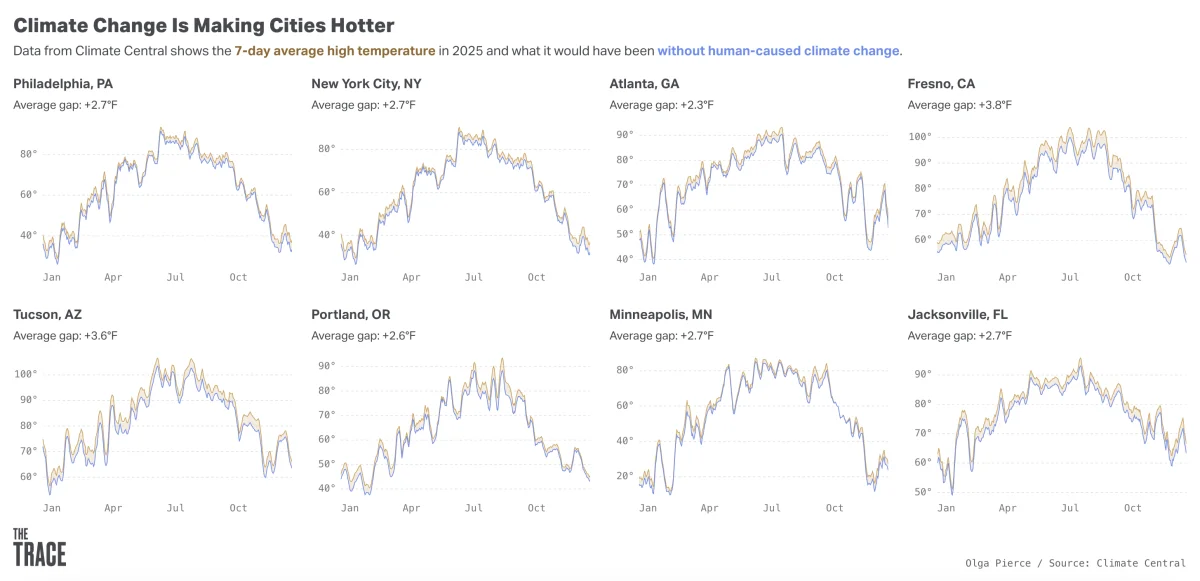
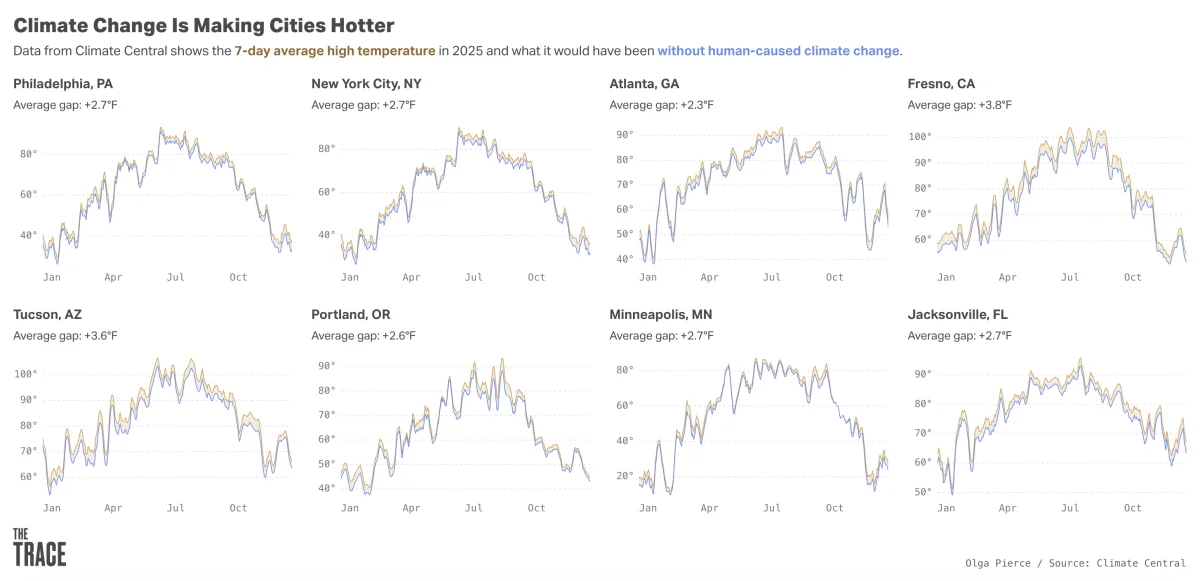
Researchers then estimated how hot each city would have been in a world without the warming influence of climate change. They used 22 climate models, alongside measured temperature records, to create hypothetical daily temperatures. The comparison suggests that climate change made a typical day in the cities about 2.4 degrees Fahrenheit hotter. The estimated increase ranged from about 1.7 degrees in San Francisco and Miami to 3.8 degrees in Fresno, California.
Applying each city’s temperature model to that temperature gap produced an estimate of shootings associated with climate change’s influence on heat. The total was about 1,950 additional incidents over the five-year period. Philadelphia’s estimated temperature increase was about 2.7 degrees Fahrenheit, corresponding to an estimated 149 additional shootings between 2021 and 2025.
Those figures carry uncertainty. The cooler-world temperatures are modelled, and the number of shootings associated with them is calculated from statistical relationships. City-level violence also reflects many influences that the analysis does not reduce to temperature. Climate Central vice president for science Kristina Dahl said the researchers can identify a climate signal in the data while recognizing that temperature is only one part of a much larger picture.
That distinction is central to interpreting the result. The study does not say that heat caused a particular person to commit a particular shooting. It estimates how many incidents might have been avoided if the cities had experienced cooler temperatures without climate change. The figure is a population-level estimate, not a way to assign motives or responsibility for individual acts.
Heat and violence in Philadelphia
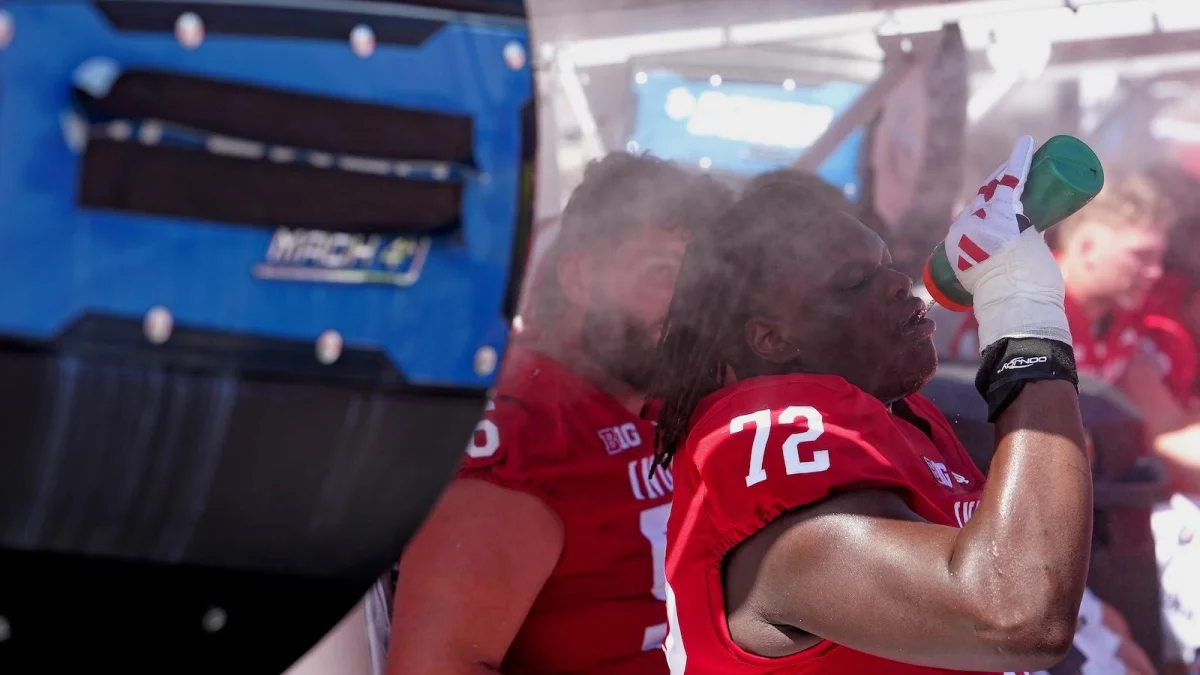
The analysis comes into focus against the extreme heat that Philadelphia experienced over the Fourth of July weekend described in the reporting. A heat dome spanning areas from Maine to the Gulf of Mexico put 165 million people under major or extreme heat. Boston, Baltimore, and Raleigh recorded local temperature highs, while Philadelphia exceeded 100 degrees for three days in a row.
At the same time, the Gun Violence Archive recorded nine shootings in Philadelphia between July 2 and July 4, leaving three people dead and nine wounded. The city was otherwise on track for its lowest homicide total since 1963. That apparent mismatch—very hot weather alongside a broader decline in violence—does not invalidate the temperature finding. As John Roman, a distinguished senior fellow at the University of Chicago’s NORC social research center, told The Trace, violence could be lower still if the climate had remained as it was in 1980.
Climate Central estimated that this particular hot Fourth of July weekend in Philadelphia was at least twice as likely because of climate change. That statement concerns the likelihood of the heat event; it does not show that climate change caused the shootings recorded over those days.
Marion Campbell, executive director of Eddie’s House, a Philadelphia nonprofit providing violence prevention and social services, described how heat can add strain for people who cannot afford air conditioning. “When you get hot you get irritated,” she said, adding that frustration may be harder to manage when people are already under pressure.
Why hotter days may change risk
Researchers point to two explanations for the broad association between heat and violence. One concerns the body’s response to heat. The brain’s hypothalamus helps regulate temperature by triggering sweating and sending more blood toward the skin. These responses help keep the body within a safe range, but they can also leave people uncomfortable and worn down.
Washington State University assistant psychology professor Kimberly Meidenbauer studies how environmental conditions affect the brain. She said heat can contribute to irritability, hostility, and frustration while making it harder to regulate emotions. It may also affect how people interpret others’ behavior: when someone is already uncomfortable, a neutral action may seem more threatening or aggressive.
Meidenbauer’s team has explored one part of this process in a laboratory study. Participants sat in an infrared sauna and played a game against a fictional opponent in which taking from the other player was possible. Higher temperatures were associated with more impulsive stealing in the game. The researchers are still working to establish how directly such findings apply to aggression between people in everyday settings.
The second explanation is known as routine activities theory. It proposes that warmer weather brings more people outdoors, creating more opportunities for encounters and conflicts. Outdoor gatherings can put many people in the same place, including people carrying guns. The Trace has reported on shootings at high school sporting events as one example of violence occurring amid crowds.
The temperature relationship also has a limit. Roman said gun violence begins to rise at fairly moderate temperatures, but the signal appears to fall again when conditions become exceptionally hot. People may stay indoors when the heat becomes difficult to tolerate. That pattern suggests climate change could affect the calendar as well as the hottest days: more spring and autumn days may become warm enough for people to spend time outside.
Heat exposure is unequal
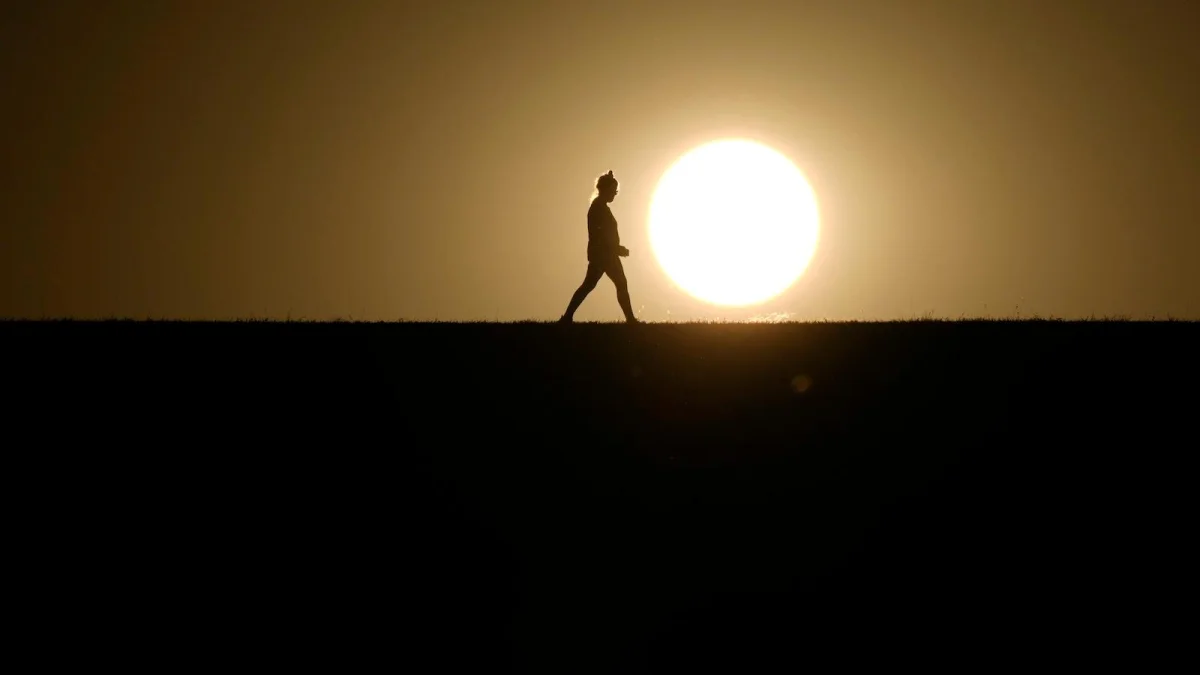
Citywide averages can conceal stark neighborhood differences. Mott Haven in the Bronx, for example, has much less green space and lower median income than Manhattan’s Upper West Side, despite being only a few miles away. The article cites a median income difference of about $100,000 and 40 percent less green space in Mott Haven. Pavement absorbs and holds heat; on an average day, surface temperatures there can be about 5 degrees higher.
Mott Haven is an urban heat island, where built surfaces and a shortage of trees and other vegetation make conditions hotter than in greener areas. Research cited in the reporting finds that heat islands disproportionately affect residents who are not white. Mott Haven is 97 percent Black and Latino.
Heat can be difficult to escape even for residents who own an air conditioner. Health department data cited in the story show that about 84 percent of households in the neighborhood have air-conditioning units, leaving 16 percent without them. Running a unit can still cost too much: one resident brought a monthly electricity bill of $1,000 to a community meeting.
“You can’t run your AC all day,” said Soledad Alvarado, a longtime Mott Haven resident and climate justice fellow at the Waterfront Alliance. Residents may reserve cooling for the hottest hours, while travel and outdoor routines keep exposing them to heat. Bus routes run along streets with little shade; subway stations can be up to 18 degrees hotter than street level; and asphalt playgrounds offer little respite.
People working outdoors may accumulate heat stress over the course of a shift. Those conditions intersect with existing pressures, rather than acting alone. Meidenbauer describes the cumulative effect of chronic strain—including financial insecurity, discrimination, limited resources, and violence—as allostatic load. When the body is already under sustained stress, she said, it may be less able to respond to another burden such as heat.
Avoiding a harmful interpretation
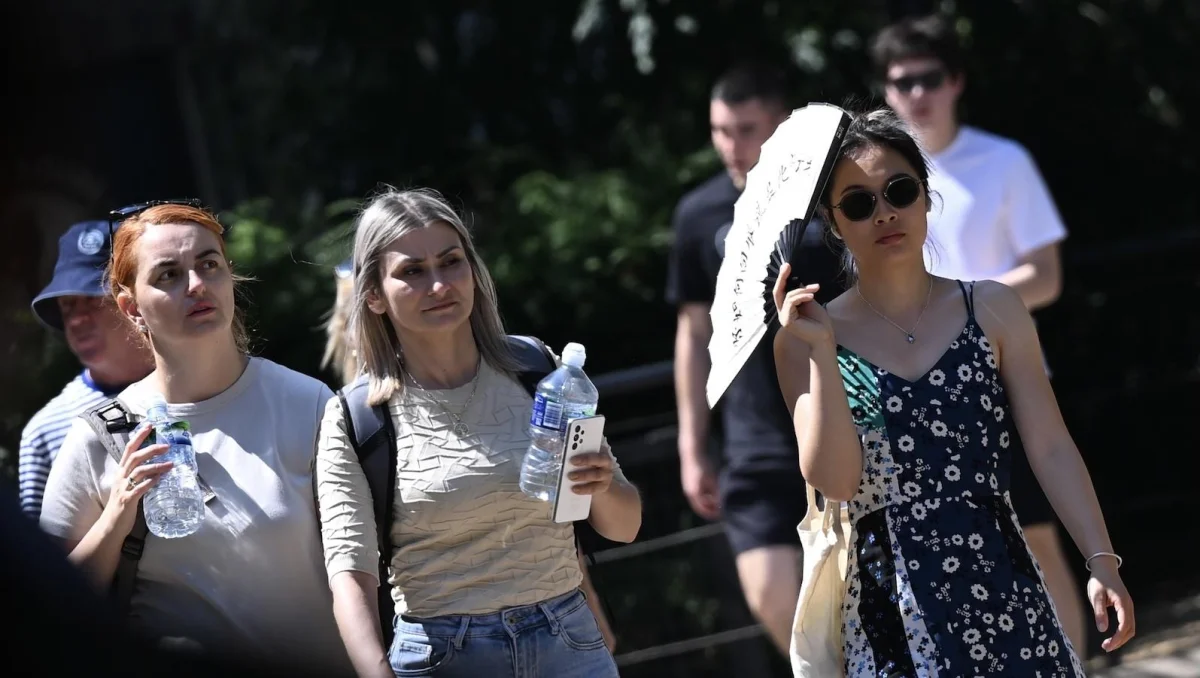
Residents in Mott Haven warned that linking heat and gun violence can reinforce old stereotypes about Black and Latino people gathering outdoors. Being outside in warm weather is often ordinary, social, and joyful; a group in a neighborhood should not be treated as evidence that violence is imminent. Community members pointed to outdoor celebrations around the World Cup and a New York Knicks victory parade as examples of people from different backgrounds sharing public space peacefully.
The caution has a long history. The notion that hot climates produce less civilized or more violent people, sometimes called climatic determinism, was used to justify slavery and colonialism. The story also describes how, in 1967, unrest in 128 cities over racial discrimination, police mistreatment, and economic oppression was reduced to the phrase “long hot summer.” Before then, an FBI warning framed racial unrest as a seasonal phenomenon and pointed to Communist agitation.
Temperature does not explain why an individual carries or uses a gun. Dahl said that many forms of support and service can ease the other pressures that may contribute to violent decisions. Keeping the analysis focused on structural conditions and aggregate risk is essential: heat adds stress, but it does not define a neighborhood or its residents.
Cooling measures and longer-term fixes
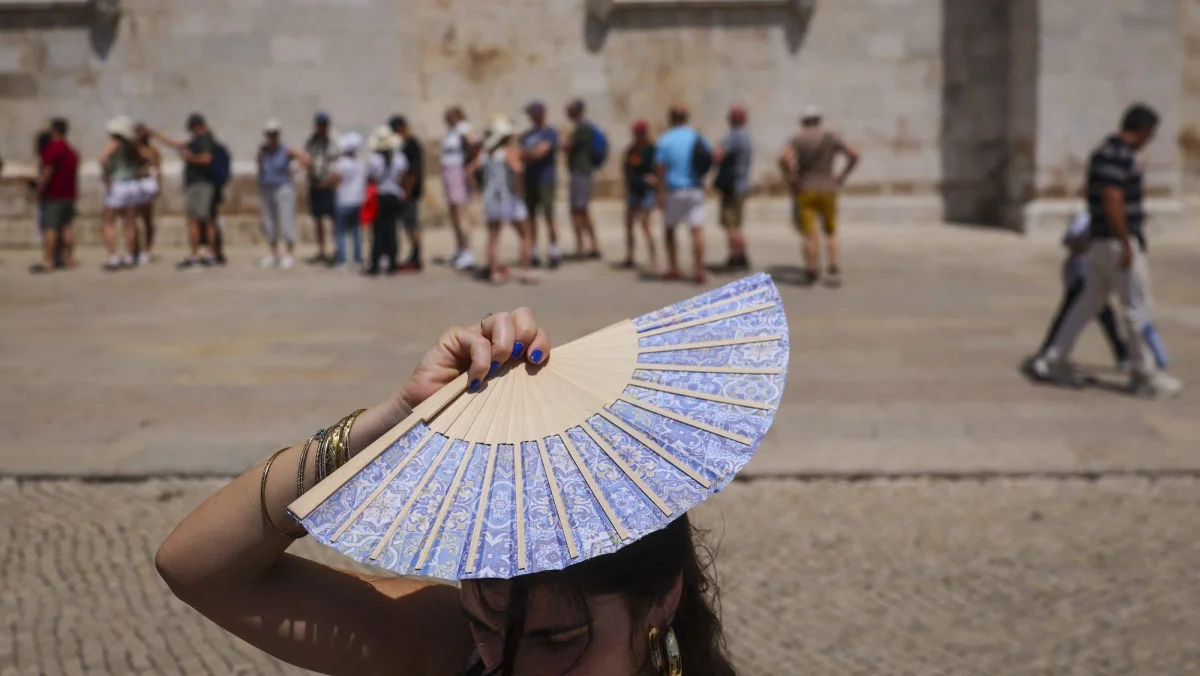
Cooling centers, libraries, pools, and community facilities can give people a break from extreme heat. New York City operates hundreds of cooling sites during heat emergencies. The story also describes mobile vans for older residents and temporary cooling centers at work sites for outdoor workers.
Access remains incomplete. A first-come, first-served program providing air conditioners to vulnerable households stopped accepting applications before summer began, earlier than in any previous year. And receiving a unit does not solve the cost of running it. That gap matters for households trying to balance heat protection against monthly bills.
Meidenbauer said heat communications could include psychological effects alongside warnings about heat illness. People can be encouraged to notice changes in mood, concentration, and sleep, particularly when hot nights interfere with recovery. Such guidance does not remove the heat, but it may help people recognize when it is affecting them.
Longer-term work would reduce the conditions that make some neighborhoods hotter. Trees and parks provide shade and help cool city blocks; areas with little vegetation can be substantially warmer. In Philadelphia, a 2018 study found that clearing trash and planting grass on randomly selected vacant lots was associated with about a 29 percent reduction in nearby gun violence in neighborhoods below the poverty line.
Philadelphia is also pursuing Tree Plan, a city-funded project run by the Pennsylvania Horticultural Society, with a goal of reaching 30 percent tree canopy across the city. Some neighborhoods have as little as 2 percent tree cover and can be up to 22 degrees hotter than leafier areas. The project connects urban cooling with a broader effort to improve neglected spaces, although the article does not claim that tree planting alone can prevent shootings.
Climate Central expects warming to continue without swift, deep reductions in heat-trapping emissions. That would mean more hot days and greater pressure on communities already coping with high temperatures and limited resources. The analysis puts one part of that pressure into numbers: an estimated 1,950 additional shootings across 100 cities over five years. Cooling access, shade, and investment in the hottest neighborhoods can reduce exposure while cities continue to address the many other conditions that shape violence.
Climate Central and The Trace collaborated on the analysis and reporting, combining climate science and gun violence expertise.
This story was originally published by Grist with the headline Higher temperatures fuel gun violence. Now we know how much is from climate change. on Oct 25, 2026.