Guatemala’s Pineapple Waste Is Being Tested as Textile Fiber
PINA&KAKAW has processed 150,000 pounds of pineapple biomass and is testing fiber blends as it works toward commercial production in Guatemala.
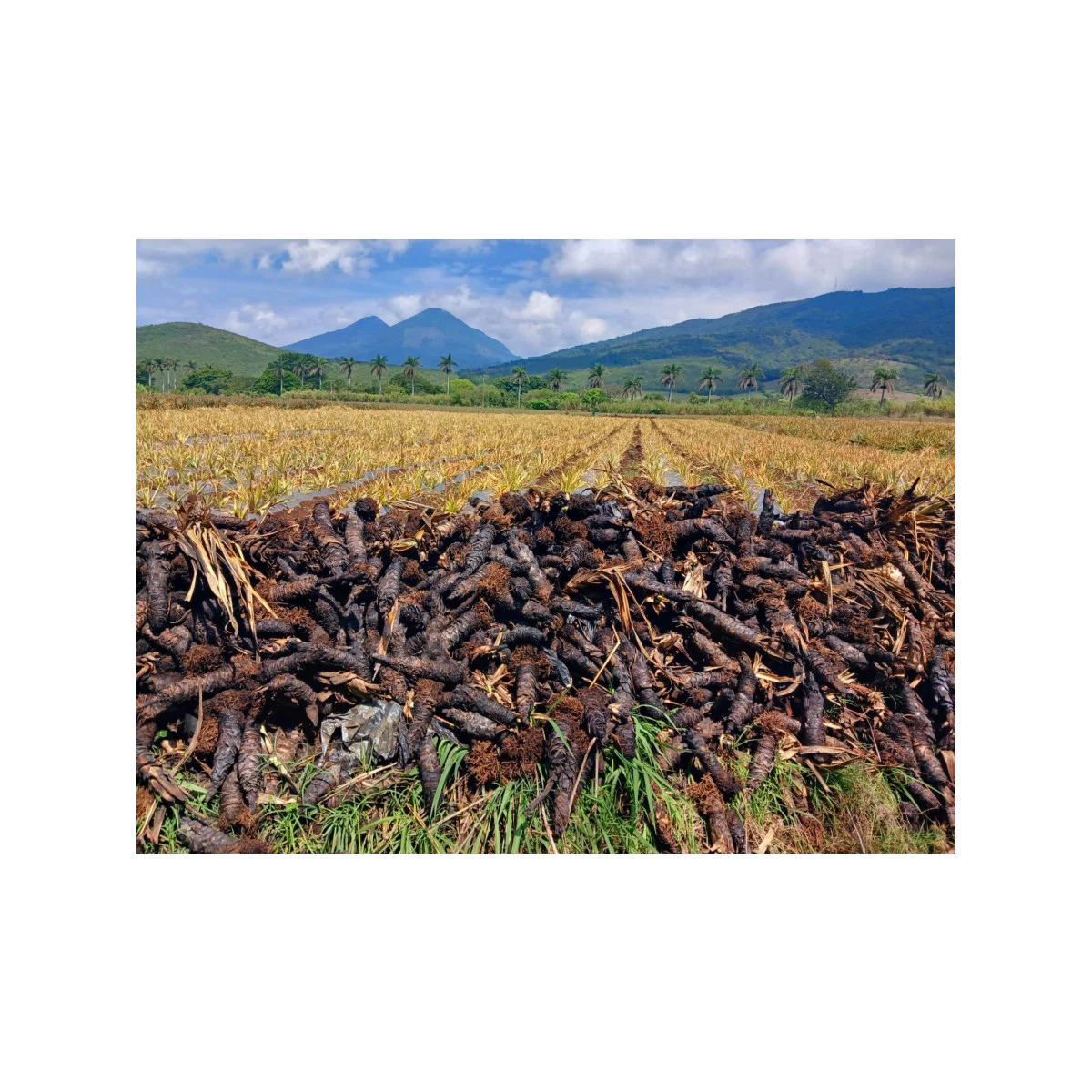
Turning pineapple leaves into textile fiber is technically possible. The harder test is whether the material can meet manufacturers’ requirements at a reliable cost and scale. In rural Guatemala, PINA&KAKAW is building that supply chain from farm residues, with local jobs and soil nutrients as part of the model.
Co-founded by Daniela Sagastume and her husband in May 2025, the company collects leaves left after pineapple harvests, extracts their natural fibers and prepares them for textile use. Material left over from processing is directed to composting, where it can return nutrients to agricultural soils. The approach aims to replace a disposal problem with a source of fiber and a useful organic by-product.
From farm residue to textile input
Pineapple fiber itself is established. The Philippines has a long history of making textiles from the leaves, and companies such as Ananas Anam have developed modern commercial uses. PINA&KAKAW’s work is focused on creating production in Guatemala and connecting farms there with textile manufacturers.
That requires more than extracting fibers. They must be cleaned, processed and made consistent enough to move through industrial spinning equipment. Manufacturers also assess qualities such as fiber length, softness and strength, as well as consistency between batches and material lost during production. Handmade fabric can demonstrate what a fiber might become; industrial trials show whether it can meet the demands of repeatable manufacturing.
The company has spent months testing extraction and processing methods, then blending, spinning, knitting and dyeing the fibers. Its initial yarn and knitted jersey trials use a blend of about 20% pineapple fiber and 80% cotton. PINA&KAKAW has also explored wool blends and is developing trials with recycled polyester for products such as carpets and rugs. Each product requires its own assessment, so success in one fabric does not establish performance in another.
That’s a practical point for any new material: its environmental appeal can open a conversation, but manufacturers need a product that runs through their equipment and passes quality checks. Performance, supply consistency and price all shape whether a promising fiber can become a commercial input.
Tracking environmental and community effects
Since starting operations, PINA&KAKAW says it has diverted more than 150,000 pounds of pineapple agricultural biomass from conventional disposal routes, including potential burning. The company has also assessed its environmental effects with the Food and Agriculture Organization’s EX-ACT methodology, which measures greenhouse gas impacts linked to agricultural and land-use activities. Its assessment estimates an emissions impact of 76 tonnes of CO2-equivalent associated with its activities.
Those figures describe different things: the biomass total measures material handled, while the CO2-equivalent estimate reflects an assessment of greenhouse gas effects. Neither figure alone shows how the operation would perform at a much larger scale. That will depend on factors such as processing efficiency, energy use, transport and how the finished material compares with alternatives. The source does not provide a full life-cycle comparison.
The company also treats employment as part of its purpose. It says women play a central role in fiber processing and production, while workers have learned to operate machinery and take on technical responsibilities. Creating opportunities for women and young people in rural communities is part of the business model, rather than a separate benefit added after production.
That local connection matters to the model: the raw material originates in agricultural communities, and processing work is intended to create value there. But lasting benefits will depend on the operation being able to sustain production and find customers for the resulting material.
Customer interest still means testing
The textile industry is competitive, and buyers need inputs that meet technical specifications, arrive consistently and make economic sense. PINA&KAKAW reports more than 150 conversations with industry professionals, potential customers, technical specialists and other stakeholders as it has refined its product and learned what the market requires.
Three potential customers are evaluating the material for flooring and carpets, hospitality textiles, and specialized performance textiles. These are testing relationships, not confirmed contracts. Their assessments may help identify applications where pineapple fiber can offer practical value, but they do not yet establish regular demand or commercial production.
The company has also exchanged technical knowledge with specialists in Asia, particularly in the Philippines, where pineapple fiber has a long history. Such collaboration can help a new producer draw on existing experience with the material while adapting methods to local conditions and manufacturing needs.
Recognition and the next production test
In 2026, PINA&KAKAW placed first in Guatemala’s ClimateLaunchPad competition and then won the Central American regional competition. Those results earned the company a place representing Central America at the ClimateLaunchPad Global Finals in Singapore. The recognition gives the young company a wider platform, but its next steps are operational: make production more consistent, improve manufacturing efficiency and secure long-term customers.
For the founders, the larger lesson is that circularity takes more than finding a second use for a discarded material. Farmers, workers, processors, manufacturers and customers all need a workable role in the chain. Guatemala’s agricultural resources, manufacturing capabilities and workforce could support that effort, but the model still has to prove itself through dependable production and demand.
Every batch and fabric trial adds evidence about where the fiber can work and what needs adjustment. If the company can turn those trials into repeatable supply, pineapple leaves that might otherwise be burned or left behind could support textile production and economic activity in the communities where they grow.