Climate Risk Is Reshaping the Costs and Meaning of Homeownership
Floods, fires and rising insurance costs are testing homeownership’s promise of security and wealth, while communities rethink what makes a place safe.
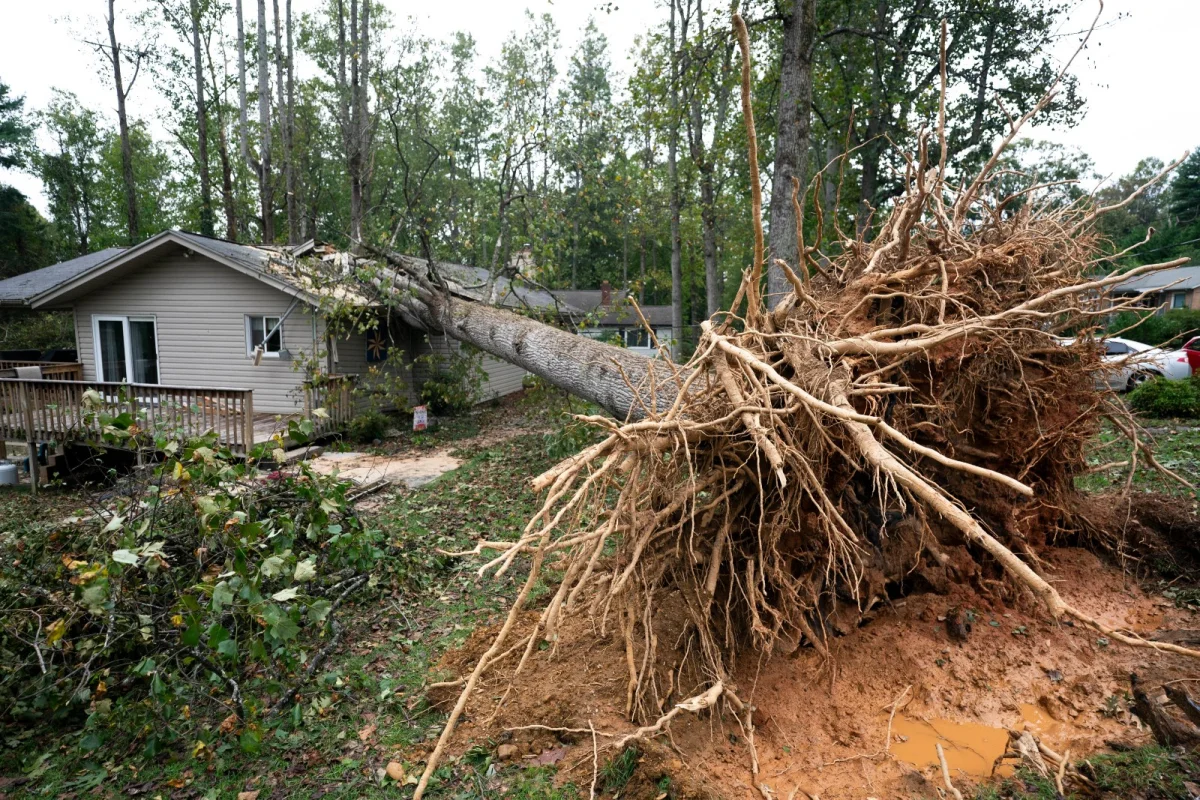
For Sierra Isley, buying a home once seemed like a familiar milestone: a place of her own and a foundation for the future. Then a house she nearly bought in Asheville, North Carolina, became a vivid reminder that homeownership can concentrate financial risk in one structure. A lien derailed the purchase. A month later, Hurricane Helene flooded the basement of the apartment she and her girlfriend, Jamie, had rented instead.
Their story captures a widening tension. A home can provide stability and build wealth, but floods, fires and rising insurance costs can put both the building and its value at risk. Climate exposure is changing the practical calculation behind a purchase, including in places once considered safer from extreme weather.
When a near purchase becomes a close call
Isley and Jamie had moved from Philadelphia to Asheville and found a three-bedroom brick house with abundant natural light and a large tree out front. With help from their parents, they made a deposit and had their offer accepted. At closing, they discovered a large lien on the property. After consulting lawyers, they ended the deal and searched for a rental.
In their apartment, Helene’s remnants brought flooding to the basement. The couple escaped the worst of the damage, while some neighbors lost their homes. Their first weeks in Asheville became a scramble for basic necessities: when water service failed, they carried water from the flooded basement to flush the toilet. They later stayed with Jamie’s parents in Atlanta, bringing their two cats. Back in Asheville, they cooked with disposable liners because the restored water wasn’t safe for washing dishes.
That experience changed how Isley looks at houses. She still browses Zillow, but now pays close attention to nearby rivers and streams. She had previously lived through hurricanes while studying in Florida and thought the Blue Ridge Mountains would offer a safer home. Asheville had been described as a “climate haven,” but nearly 14 inches of rain fell there over three days in September 2024. The French Broad River overflowed, flooding homes and damaging parts of the River Arts District.
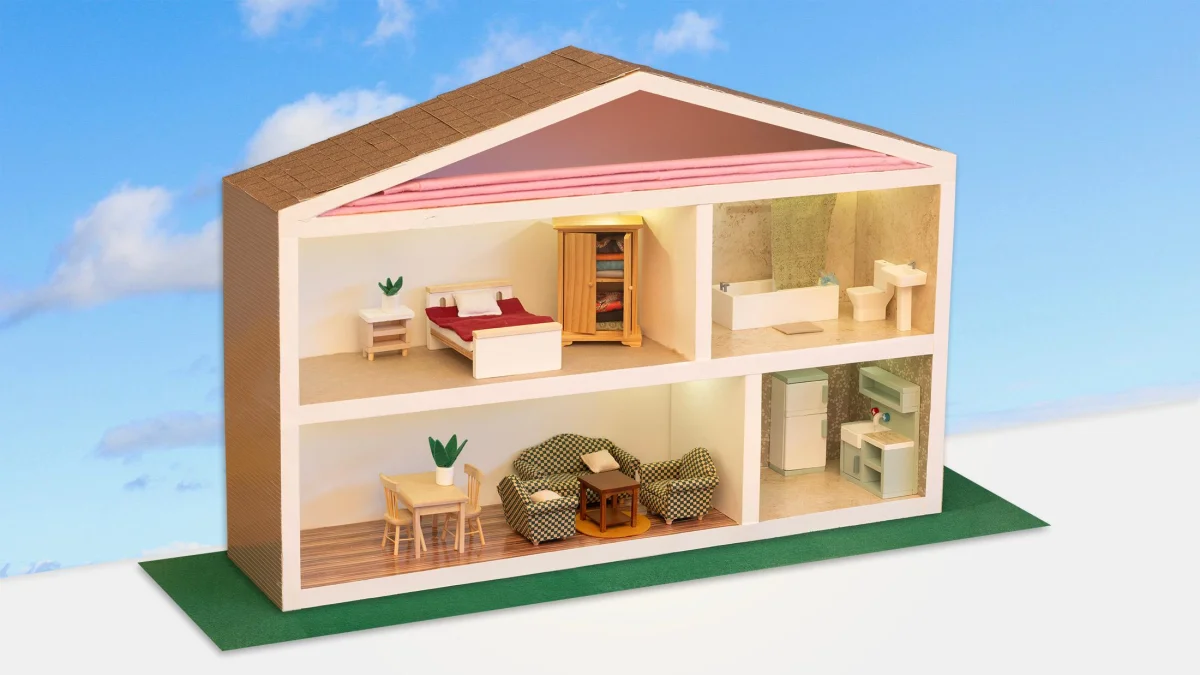
Across western North Carolina, more than 74,000 homes were damaged. Only about 4 percent had flood insurance, and uninsured residential property losses reached $9.5 billion. The scale of that shortfall shows how a disaster can leave households with immense repair costs even when they have managed to keep a roof over their heads.
Climate risk can also shape decisions far from the site of a recent storm. Isley and Jamie briefly considered California after the 2024 election, partly because Jamie is trans and they were seeking a place with more protective policies. Isley’s first thought was wildfire risk. They set the idea aside.
Home value can fall before a house is unlivable
Homeownership has long been treated as a route to savings for later life and future expenses, including education and retirement. But the promise rests on an assumption: that a house will retain enough value to support its owners. Climate hazards can weaken that assumption through physical damage, higher costs to protect a home, or a shrinking pool of interested buyers.
In its report “Property Prices in Peril,” First Street projected that climate risks could reduce the value of U.S. homes by nearly $1.5 trillion by 2055. The estimate points to the combined effect of many local risks on household wealth. It doesn’t mean every property will lose value, but it does suggest that risk is becoming part of the housing market’s long-term outlook.
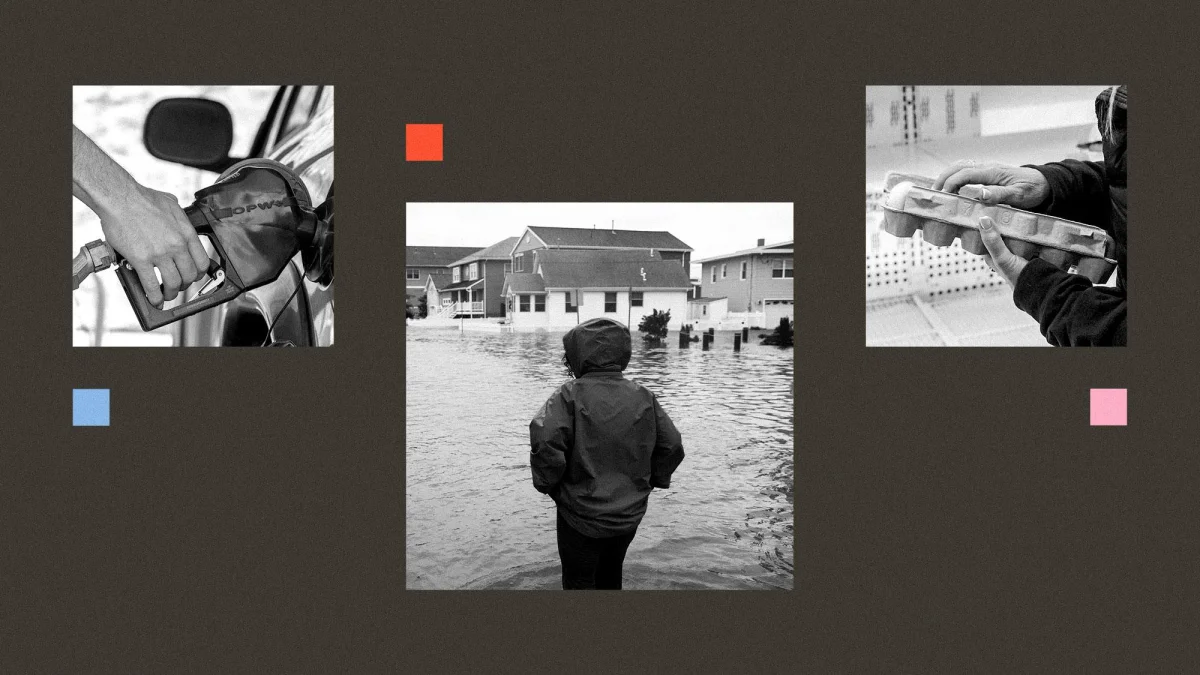
Some buyers and sellers are already responding. A 2023 study in Nature Climate Change found homes in high-risk flood zones sold for an average of 2.8 percent less than comparable homes would otherwise have fetched. The researchers also estimated that flood-exposed homes remained overvalued by $121 billion to $237 billion, with Appalachia among the areas where prices were especially out of step with risk. That finding came a year before Helene struck.
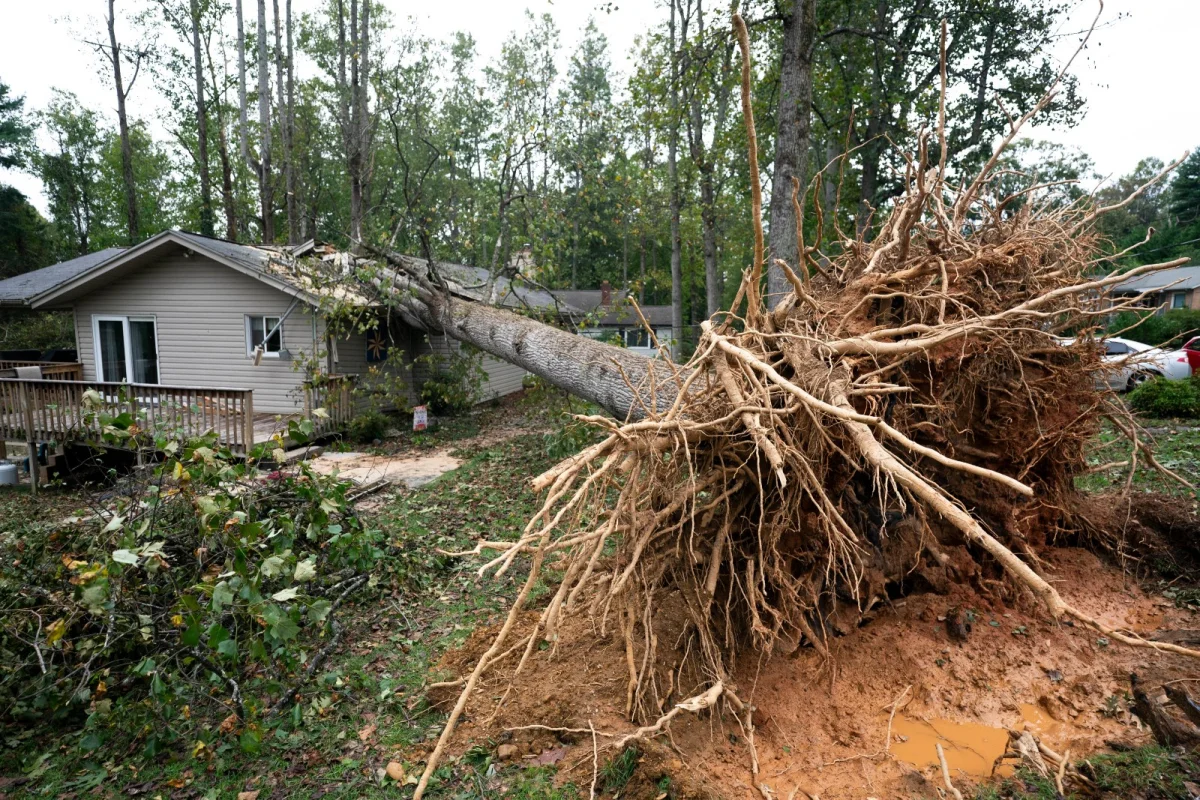
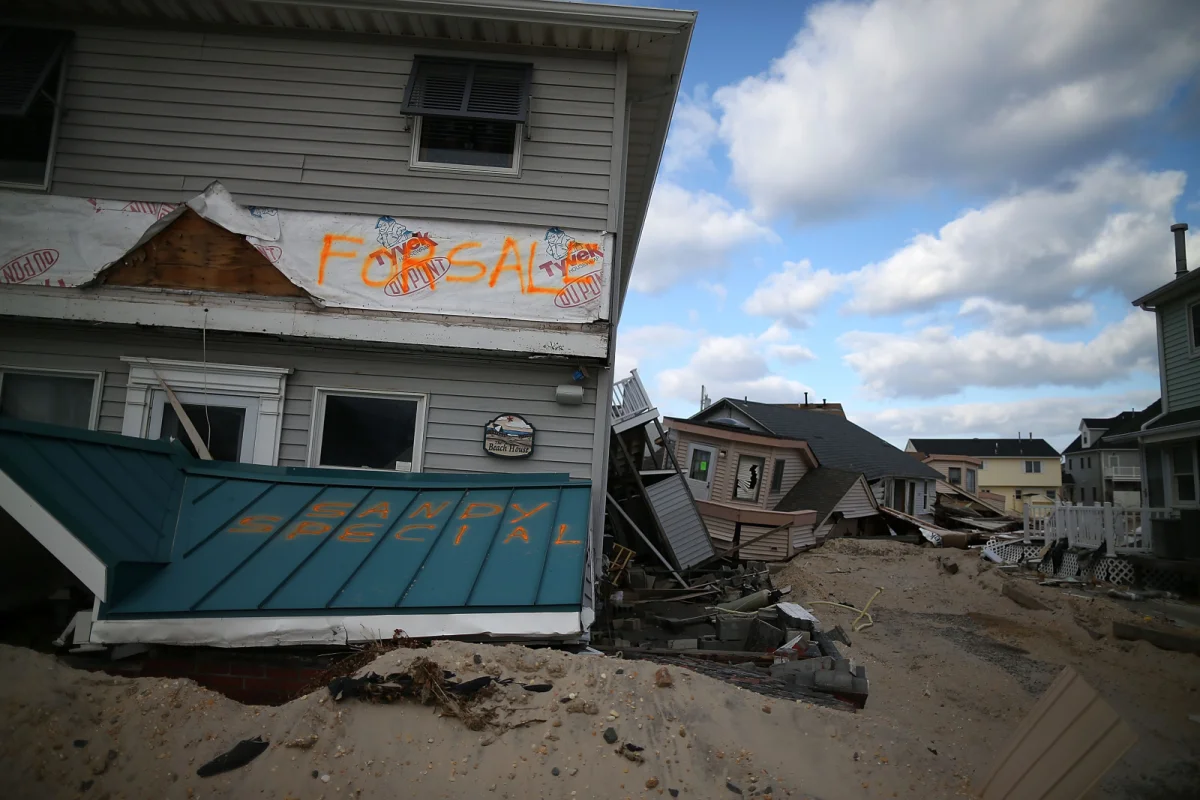
Rebecca Elliott, a sociology professor at the London School of Economics and Political Science, has written that climate-related declines in home value are uneven and can cause “tremendous social harm.” Owners may find their most valuable asset losing worth at the same time they face costs to repair, insure or leave it. Following Superstorm Sandy in 2012, some homeowners along the New York City and New Jersey coasts couldn’t sell for enough to buy elsewhere, leaving them stuck.
Mark Wilson / Getty Images
The risk doesn’t stop at buildings already damaged by a storm or fire. As buyers grow warier of floodplains, storm-exposed coasts and wildfire-prone areas, homes in those places may lose value without being physically destroyed. Elliott has warned that some could become “economically worthless” before they are unfit to live in. For an owner who needs to move, that loss can make relocating difficult precisely when it feels most urgent.
The broader outlook is also reflected in a Data for Progress survey conducted for Grist. It found that 58 percent of likely U.S. voters expect climate change to hinder their ability to achieve the American Dream over the next 20 years, including 42 percent of Republicans. The survey highlighted concern about the cost of living. Those results suggest that climate risk is being understood not just as a distant environmental issue, but as a pressure on everyday financial security.
Insurance adds costs for owners and renters
Home insurance is meant to cushion the financial blow when a property is damaged. Douglas Heller, insurance director at the Consumer Federation of America, described it as “the safety net for the American Dream.” Yet that protection is becoming more expensive. Since 2020, property insurance costs have risen almost 80 percent, according to ICE Mortgage Technology, and the average single-family mortgage holder now pays $209 a month.
Costs can be much higher in the riskiest areas. Some California homeowners have lost coverage, while insurance rates are rising faster in the Midwest than in any other region, driven by severe-storm costs. Heller says worsening weather is only part of the explanation. He argues insurers are using climate change to justify excessive increases, and describes the market as close to dysfunctional for many households.
For older residents around Lake Tahoe who depend on Social Security, the pressure can arrive through condominium association fees. Andrew Engler, founder and chief executive of Rock Rose Risk, says associations in wildfire-risk areas face higher shared insurance costs. Those charges can be difficult for people on limited incomes, while the fees themselves can make the property harder to sell. Economists estimate that higher insurance costs tied to disaster risk have reduced home-price growth by more than $40,000 in the ZIP codes most exposed to hurricanes and wildfires.
Renting offers more flexibility to move, but it doesn’t keep households out of the cost chain. Higher insurance premiums for apartment buildings can be passed on to tenants through rent. “Whether you are a homeowner or a renter, we’re all paying for living under the increased risks of climate change,” said Caroline Nagy, associate director of housing policy at Americans for Financial Reform. Rising housing costs can make it harder to save for a down payment, while also raising questions about whether buying in a particular place is a sound choice.
Security depends on people as well as property
After Helene, Isley and Jamie saw how quickly neighbors became essential. With electricity and cell service out, they walked through town to learn what had happened. People gathered at a fire station where fresh water was available. Isley recalls feeling a strong sense of mutual support: neighbors relied on one another, and she felt her own help mattered to them.
That experience points to another idea of security. The conventional homeownership ideal prizes independence and personal freedom, but disasters reveal how much survival and recovery depend on shared effort. Nick Tinoco, a sociology researcher at the University of California, Los Angeles, interviewed people who survived the 2018 Woolsey Fire in Los Angeles County. Some residents organized volunteer fire brigades and planned to remain in their neighborhoods to defend them during future fires.
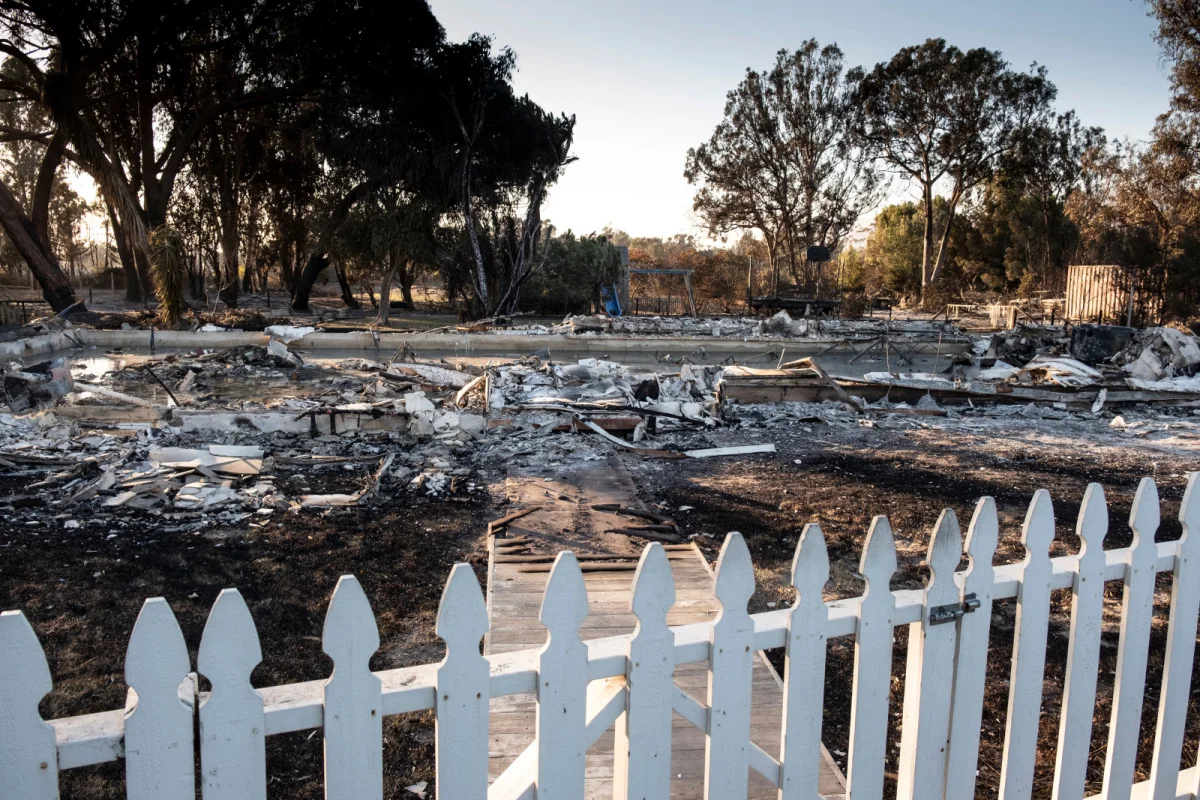
David Crane / Digital First Media / Los Angeles Daily News via Getty Images
The idea that people can simply move away from danger is also becoming harder to sustain as places thought to be relatively safe experience damaging events. Elliott argues that communities need to make people secure where they live. That means considering housing not only as a private asset, but as part of a place where residents need reliable services, local support and ways to prepare for hazards.
There may be room to rethink the place of homeownership in the American Dream. An Ipsos survey found that 46 percent of baby boomers associated owning a home with that ideal, compared with 13 percent of Generation Z respondents. The gap suggests younger adults may be less likely to define success through owning a particular kind of property.
Isley and Jamie returned to see the house they had nearly purchased after Helene. It was still standing, but they couldn’t tell whether floodwater or storm damage had affected the interior. “Who knows if it flooded or anything like that, what kind of storm damage it took, and that would have immediately been our problem,” Isley said.
For Isley, the storm also shaped a new direction. She is applying to public health graduate programs and hopes to work in emergency preparedness. She wants to use her skills to help people in rural communities facing climate-related emergencies. The lesson from her near purchase is practical: a home’s price and appearance tell only part of its story. Local hazards, insurance costs and the strength of a community can all shape whether a place offers lasting security.