EPA Archive Closure Puts Decades of Environmental Records at Risk
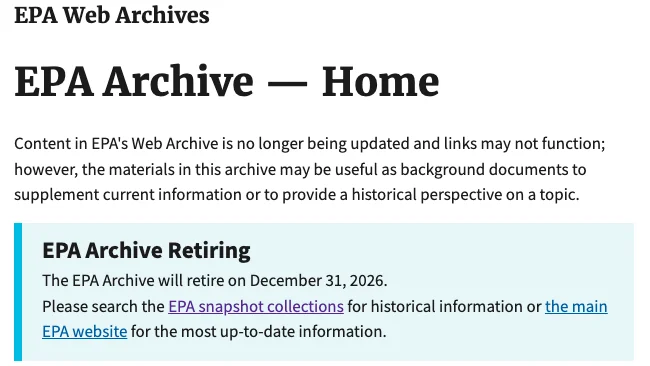
The EPA plans to retire its online archive by December 31, 2026, putting decades of environmental records and research materials at risk.
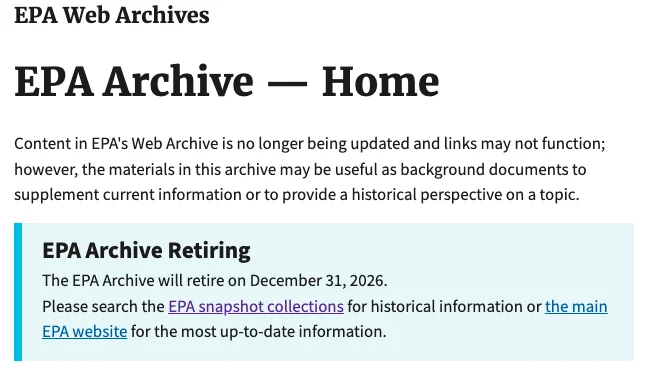
The EPA’s plan to retire its online archive by December 31, 2026, raises a practical question for researchers and the public: where will decades of environmental records remain accessible? The collection holds tens of thousands of documents, including reports, fact sheets, and records of past agency actions. Some of those materials are not available elsewhere.
The archive has served as a historical record of changing approaches to environmental issues. Gretchen Gehrke, co-founder of the Environmental Data and Governance Initiative (EDGI), says it covers a wide range of subjects and reaches back at least 20 years. She describes the information as irreplaceable. If the collection disappears without a reliable substitute, people may lose access to records they use to understand past decisions and compare them with current conditions.
That role matters for environmental research. Older reports and agency materials can help explain how a pollution standard developed, what evidence was cited, and how an approach changed over time. They can also provide context for communities tracking local environmental concerns. A historical record is most useful when people can find and compare its contents without making a separate request for each document.
A closure plan with a long history
This is not the first proposal to close the archive. In January 2022, the EPA said it planned to discontinue the repository, citing the cost of maintaining it. Gehrke later obtained records showing that upkeep cost roughly $2 million a year. Researchers, historians, librarians, and environmental groups objected, warning that closure could leave a substantial gap in the historical record.
After months of criticism, the agency delayed the proposed retirement by a year, setting a new date of July 2023. That postponement did not settle the longer-term question. As I wrote for New Security Beat at the time, an extra year of access would not prevent the eventual loss of records if no lasting plan followed.
In March 2023, the agency changed the archive notice again, saying the site was “retiring” without naming an end date. The collection then remained accessible for more than three years, although it was no longer being updated. A recent change to its webpage now gives December 31, 2026, as the expiration date.
The collection has never been easy to use. Researchers have encountered broken links and limited search tools. Those shortcomings make better preservation and access more pressing: a record that is hard to search can still hold information unavailable anywhere else. Its limits are a reason to improve the resource, rather than evidence that its contents have no lasting value.
Why the historical record matters
The archive includes materials tied to major shifts in how power plant pollution was addressed, including the 2003 Clear Skies Initiative and the 2015 Clean Power Plan. These records can help readers trace how proposals and standards changed across different periods. They also preserve older versions of agency webpages, a function that became especially relevant when many climate-related pages were removed during the first Trump administration.
That history has immediate value for people assessing environmental impacts. Records from a decades-long investigation into contamination at Marine Corps Base Camp Lejeune and the nearby Marine Corps Air Station in North Carolina were preserved in the archive. The investigation found contamination in soil, sediment, surface water, and groundwater. Residents and service members could use those documents to review the findings and examine the agency’s work over time.
When records remain online, communities can consult the underlying material directly. If access shifts to individual information requests, locating the same documents may take longer and require more staff time. Lauren Harper, the Freedom of the Press Foundation’s first Daniel Ellsberg chair on government secrecy, warned that researchers and lawmakers could be pushed toward an already overburdened information-request office to obtain records that were once readily available.
Snapshots may not replace the collection
The EPA’s updated notice points readers to its snapshot collections for historical material. The key unanswered question is whether those snapshots contain the full archive, preserve its links and structure, and will remain accessible. A few saved versions of webpages may not capture the breadth of a repository built up over decades.
Gehrke argues that the EPA should expand and organize the archive rather than expect a small number of snapshots to serve as a substitute. That distinction matters for practical research: preserving files is only part of the task. People also need a way to search them, understand when they were published, and follow connections between documents.
The EPA did not respond to a request for comment. Until the agency clarifies what will be preserved and how people will reach it after the listed retirement date, researchers and communities face uncertainty about records they have relied on. The concrete test is whether the historical material remains complete, searchable, and publicly accessible after December 31, 2026.
This story was originally published by Grist under the headline The EPA is quietly killing its web archive on October 31, 2026.