Newsrooms Expand Coverage of Industrial Agriculture’s Health and Water Impacts
Regional and national outlets are tracking farm pollution, health risks and food system costs as public attention grows across the Midwest.
Industrial agriculture is receiving sustained attention from a wider range of newsrooms, as concerns about water quality, health and the cost of food production gain visibility across the Midwest. The shift matters because these effects reach beyond farms: they shape drinking water, rural communities and the way food is produced and priced.
In Iowa, public discussion has turned to rising cancer incidence and farm practices linked to polluted water. In Nebraska, reporting and debate have focused on imported beef, labor shortages and higher costs. Kansas has grappled with those concerns alongside competition for water between farms and data centers. Across the central farm states, diesel prices and tariffs that damaged grain export markets have added pressure to agricultural communities.
These subjects are drawing national correspondents into farm country, while smaller regional and nonprofit outlets have been investigating them for years. Circle of Blue, for example, has reported on agricultural impacts on water, including harmful algae in Lake Erie. The expanding coverage reflects a broader interest in how food production affects people and ecosystems.
“Right now, food issues, food system issues, are driving political narratives in ways we haven’t ever seen, or haven’t seen before in a long time,” Theodore Ross, editor-in-chief of the Food and Environment Reporting Network (FERN), told the article’s author. Ross pointed to harmful chemicals, water pollution and meat prices as subjects that now feature prominently in discussions about Iowa, Kansas and Nebraska.
A long record of agricultural reporting
Investigations into the costs of industrial farming have a long history in American journalism. Upton Sinclair’s 1906 novel The Jungle exposed unsanitary conditions in meatpacking. In 1979, James Risser and the Des Moines Register won a Pulitzer Prize for reporting on soil erosion and agricultural water pollution. In 2017, Art Cullen and the Storm Lake Times received a Pulitzer for editorials challenging powerful agricultural companies over nitrogen runoff and water quality in Iowa.
Work on the health and environmental effects of livestock production has also earned major recognition. In 1996, Melanie Sill, Pat Stith and Joby Warrick of the Raleigh News and Observer won a Pulitzer Prize for documenting risks associated with the large volume of manure generated by North Carolina’s hog industry.
What’s changed, the source argues, is the continuity and breadth of attention. Nonprofit newsrooms, podcasts and commercial outlets are examining farm pollution, possible health consequences and the effects of consolidation on rural communities. The work spans local investigations, data projects and national reporting, giving readers different ways to understand a complex food system.
Regional reporting puts detail on the record
In Nebraska, Yanqi Xu’s Flatwater Free Press series examined a large hog farming operation and nitrate contamination. The series received first place for Outstanding Explanatory Reporting in the Society of Environmental Journalists’ annual awards.
Civil Eats has developed from a blog launched after a 2008 San Francisco event into a publication covering food systems and industrial farming. Its 2024 investigation into the pesticide industry’s influence is one example of its reporting on how agricultural chemicals are used and discussed.
Inside Climate News has assembled reporters Georgina Gustin, Lisa Sorg, Phil McKenna and Anika Jane Beamer to investigate pollution from confined animal feeding operations. Sentient Media’s “Inside Iowa” project mapped the state’s factory farms and made its data freely available. The project estimated that those farms produce more than 100 billion pounds of manure each year; it also reported that citations for manure spills into waterways rose by nearly a third from 2024 to 2025.
Other outlets add different areas of focus. Investigate Midwest monitors influential agricultural companies and institutions. The New Lede, edited by Carey Gillam, reports on toxic pesticide risks and works closely with Circle of Blue. In 2025, The Guardian’s Tom Perkins led an investigation into wastewater from a Perdue Farms soybean processor in Salisbury, Maryland, and its connection to PFAS contamination in the town’s drinking water.
The Mississippi River Basin Ag and Water Desk, based at the University of Missouri School of Journalism, has also examined the reasons the Gulf of Mexico’s “dead zone” persists. Its “Farm to Trouble” project explored the relationship between agriculture and the oxygen-depleted area.
Podcasts extend the reporting
Audio reporting has become another way to connect farm practices with health and environmental effects. The Center for Investigative Reporting’s documentary podcast Reveal explores links among food production, agricultural chemicals, public health and food systems.
The Real Organic Podcast, which began during the 2020 pandemic, publishes weekly episodes on Tuesdays. Its co-host, Linley Dixon, farms organically near Durango, Colorado. She holds a Ph.D. in plant pathology and a master’s degree in organic farming systems. The hour-long conversations feature people examining agricultural risks, including economist Chuck Benbrook, who studies the toxicity of Roundup herbicide, and Austin Frerick, author of Barons: Money, Power, and the Corruption of America’s Food Industry, published by Island Press in 2024.
Frerick’s book examines how companies gained control across parts of the food production system. The source links that concentration to weak limits on pollution and fewer constraints on consumer prices. Dixon, meanwhile, argues that food production relies too heavily on crops grown for ethanol and confined livestock. She says restoring prairie grasses and raising animals on pasture could reduce the need to grow and transport corn and soy for feed, a system she associates with higher methane production.
Food and Water Watch communications manager Phoebe Trotter says public awareness of agricultural pollution and its effects on health and the environment is growing. She attributes the attention both to journalism and to worsening pollution, arguing that as impacts become more visible, coverage is likely to expand.
The reporting gathered here describes a sector with substantial effects on water and air, rural populations and consumer costs. Its central value is making those effects concrete: documenting contamination, tracing its sources and showing how production choices connect to daily life. Sustained scrutiny can help readers assess which practices carry the greatest costs and what safer approaches might look like.
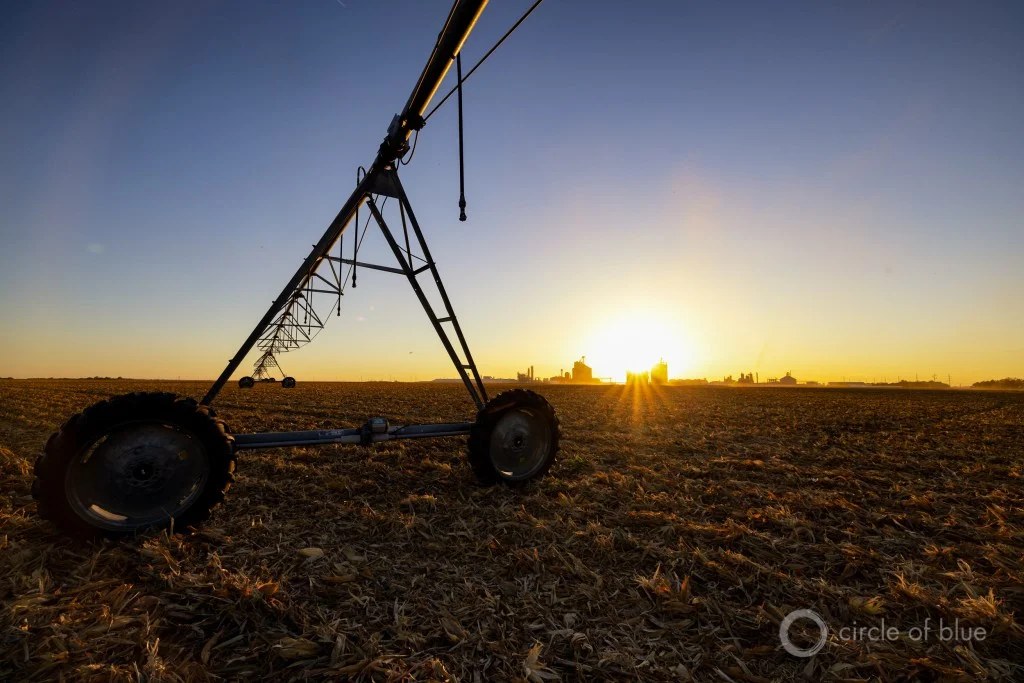
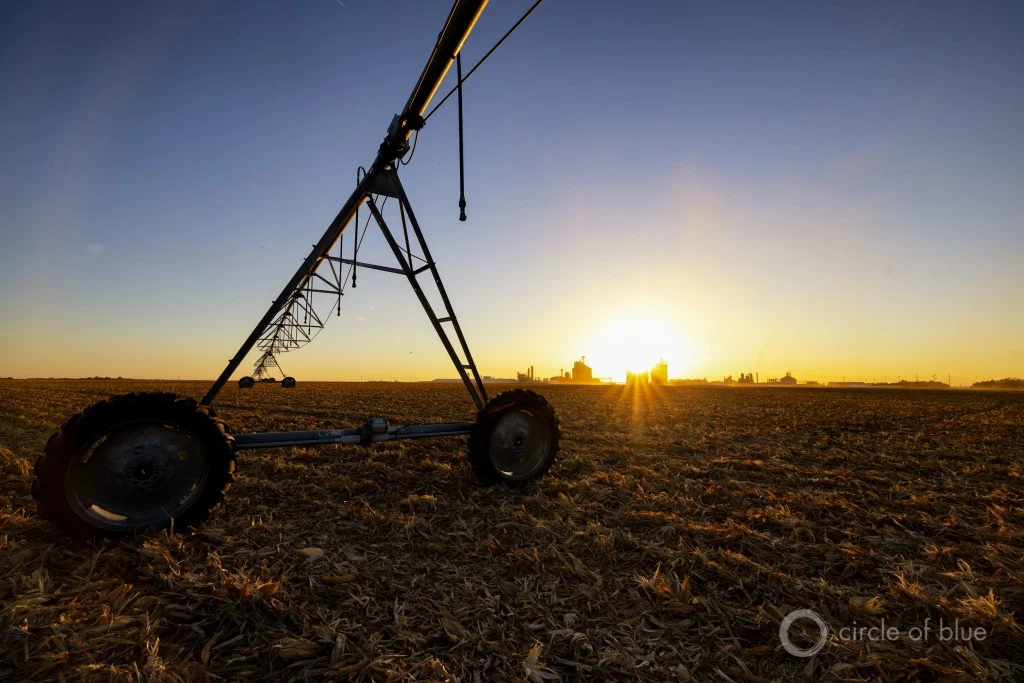
Lead image: Ethanol plant in Aurora, Nebraska. Photo © J. Carl Ganter/Circle of Blue
The post Media Interest in Harm from Agriculture Is Expanding appeared first on Circle of Blue.