Perennial Grains Bring Kansas Prairie Lessons to Modern Farming
The Land Institute’s perennial crops aim to conserve soil and water, while research and farm trials extend the approach beyond Kansas.
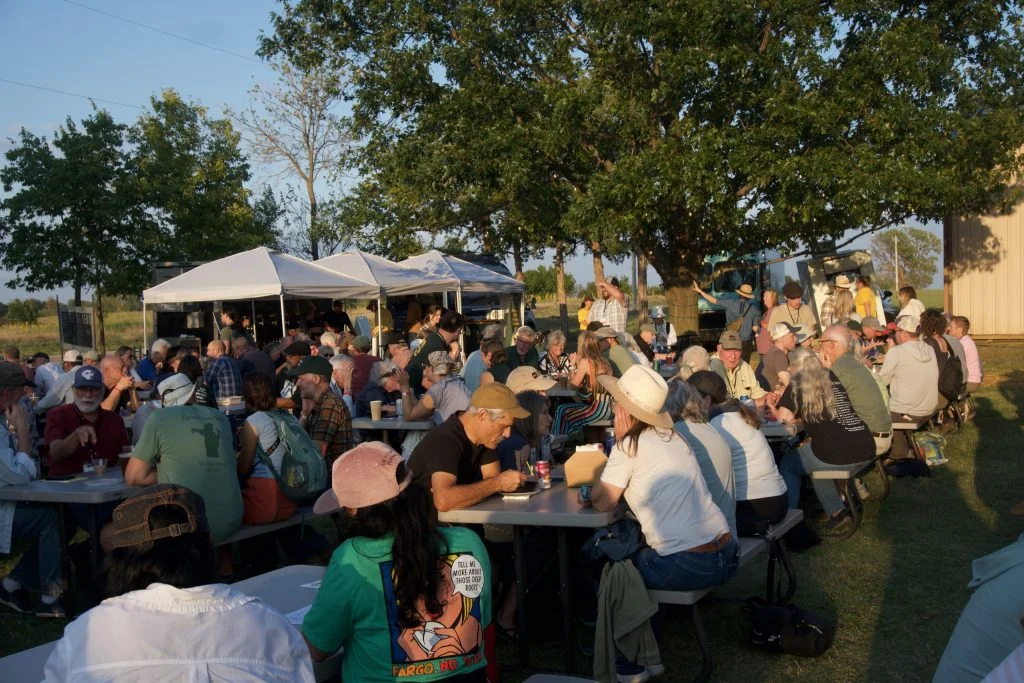
Perennial grains could change farming’s relationship with soil: instead of replanting fields each year, farmers could grow crops that return season after season, with deep roots inspired by native prairie. That idea has been central to The Land Institute’s work for nearly five decades. At its Prairie Festival in Kansas, about 1,000 people gathered to mark the organization’s 50th year and hear how its research is spreading through crop science and farming.
From prairie observation to crop research
Wes and Dana Jackson founded The Land Institute in 1976 as a nonprofit school in Salina, Kansas. Its first purpose was to teach a small group of students ways to produce food while respecting natural systems, conserving water and energy, and managing waste. The institute emerged amid growing interest in environmental stewardship and alternatives to conventional farming.
Two years after opening, Wes Jackson redirected the organization toward basic science and plant breeding. His goal was ambitious: develop grain crops that could be planted once, grow back annually, and draw on the qualities of perennial prairie plants. That would replace the annual cycle of planting, plowing, and harvesting that can leave soil exposed and require repeated inputs of water and energy.
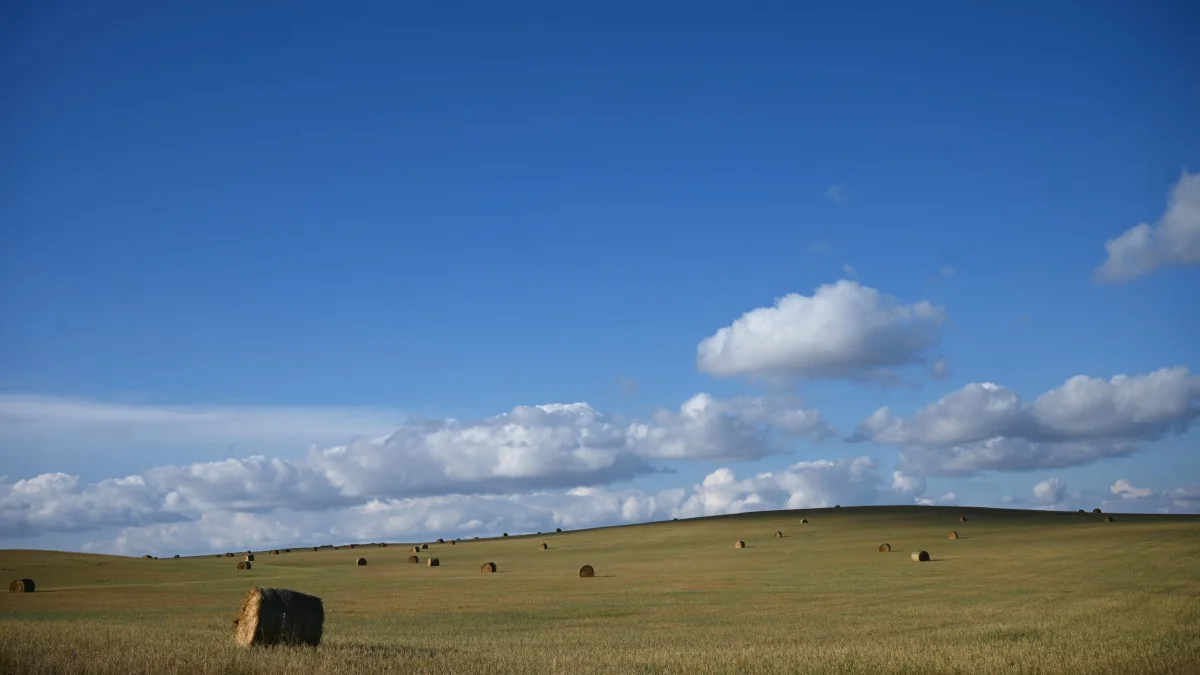
The tallgrass prairie of Jackson’s native Kansas provided the model. Big bluestem, Indiangrass, switchgrass, and little bluestem persist through seasons with extensive root systems. Jackson hired plant scientists to pursue perennial grain crops and gave the work a 50-to-100-year horizon. The research has since produced Kernza, a perennial grain made from wheatgrass. It is commercially available and used in beer, vodka, bourbon, cereal, pasta, and baked goods.
More than 4,000 acres of Kernza are now cultivated across 15 states, with Minnesota, Kansas, and Montana leading production. Those figures show both progress and scale: the crop has moved beyond research plots and into commercial use, while remaining a small part of the country’s overall grain production.
Research reaches beyond Kansas
The Land Institute now has 55 staff members and a $12 million budget. Its researchers are working with breeders in China on perennial rice, and are testing perennial sorghum in Africa after crossing sorghum with Johnsongrass. Perennial wheat, legumes, and sunflowers are also in development. Scientists in 24 other countries are pursuing perennial food crops.
Major American agricultural universities are collaborating with institute researchers, with research grants from the U.S. Department of Agriculture supporting some of that work. These partnerships suggest perennial crops are attracting interest beyond the organization that began the effort. Still, the range of crops at different stages of development makes clear that the approach is not yet a ready-made replacement for annual grain production.
At the festival, institute president Rachel Stroer described the Jacksons’ work as the start of a wider effort to connect practical farming with a more livable future. Dana Jackson, who left the institute in the early 1990s, spoke about continuing cooperation among organizations. She recalled that the founders’ early agenda also covered energy, shelter, and waste, and argued that perennial foods and renewable energy remain central to the institute’s mission.
Why the farming system matters
The case for changing how grain is grown reaches beyond crop yields. The source article describes industrial agriculture as a major source of water contamination, linking heavy use of agricultural chemicals and polluting nutrients to water quality problems and health concerns in the central United States. It cites reporting on chemical pollution and rising cancer incidence in Iowa.
The current system has also brought pressure to farms and rural communities. The article reports that 635,000 family farms have gone out of business since 1976, a 25 percent decline, while production and food processing have become more concentrated. It describes rural towns across the Midwest losing businesses and residents. Those trends reflect a mix of forces; perennial crops alone would not resolve the economic challenges facing farms or small towns.
The festival’s discussions linked these concerns to the demands of annual production, which can require repeated work on fields and ongoing inputs. Participants argued for food systems that place greater weight on soil health and ecological processes. The practical question is whether perennial crops can perform reliably at commercial scale, fit existing markets and equipment, and provide farmers with dependable returns. The article reports crop acreage and commercial uses, but does not provide yield or cost comparisons with annual grains.
Soil as the foundation
Jackson told the reporter that conditions below the surface help explain the value of perennial farming. Prairie plants hold soil in place, develop deep roots, and cycle nutrients. Their diversity helps prairie ecosystems resist pests and disease, while the land stores water and carbon. This combination is the biological model behind the institute’s breeding work: keep living roots in the ground for more of the year and reduce dependence on repeated disturbance.
Jackson also drew a lesson about community from prairie ecology. Diverse plants depend on relationships and shared resources, he said; human communities can use similar principles to build farming systems that work with their surroundings. That idea offers a broader frame for the festival’s focus on agriculture: crop development, local livelihoods, and care for land are connected questions, even when the effects of a new crop take years to measure.
The institute’s goal is for perennial farming to become the predominant form of agriculture by its 100th year. That remains a long-term ambition, not a forecast. Kernza’s current footprint, international breeding work, and university collaborations mark concrete steps, while the development of other perennial crops points to the research still ahead. The next measure of progress will be whether those crops can expand while delivering practical benefits for farmers, soil, and water.
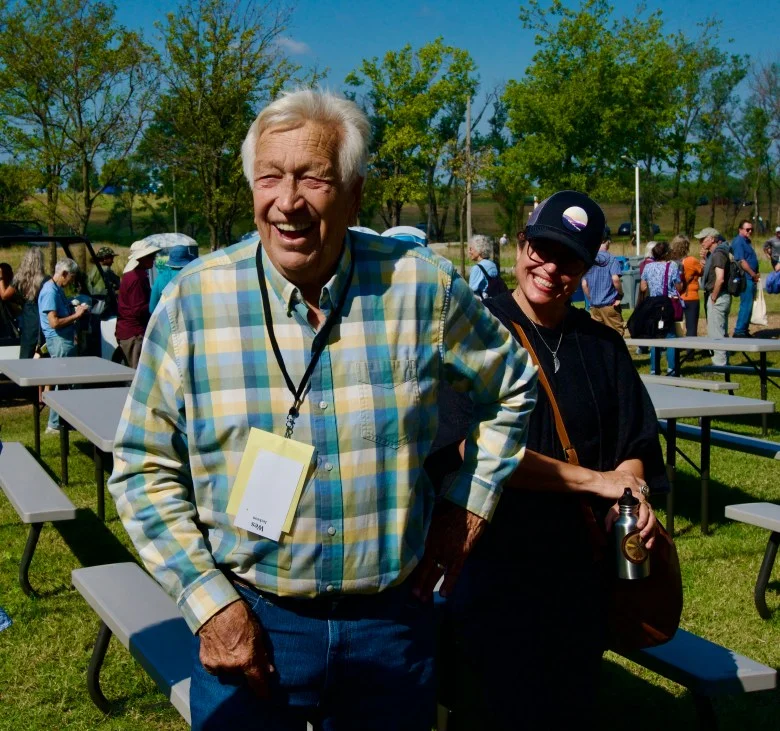
Lead image: The Kansas Prairie Festival. Photo: © Keith Schneider/Circle of Blue
The post Kansas Prairie Festival Celebrates Agriculture That Protects Soil, Water, and Communities appeared first on Circle of Blue.