Puerto Rico Apartment Building Uses Solar and Batteries for Three Independent Power Systems
A Bayamón apartment building pairs rooftop solar with battery storage to serve two homes, parking gates and shared lighting during frequent outages.

A two-apartment building in Bayamón now uses three separate solar and battery systems to keep essential loads running through frequent power outages. The installation shows how a property with little room for a generator can divide backup power across homes and shared facilities.

Ricardo Fonseca, owner of Ingenious Solution Services, designed and installed the system using Briggs & Stratton SimpliPHI 6.6 batteries. The Bayamón project builds on more than 20 years of Fonseca’s work installing solar and storage in Puerto Rico, where unreliable electricity has led households and businesses to seek ways to maintain power independently.
Fonseca’s company first served the pharmaceutical industry with validation work, then expanded into electrical, plumbing, refrigeration, appliance and thermal-study services. After Hurricane Maria, he said, the island’s electrical system failed and demand for photovoltaic systems rose sharply. He has since worked with multiple battery brands and system configurations.
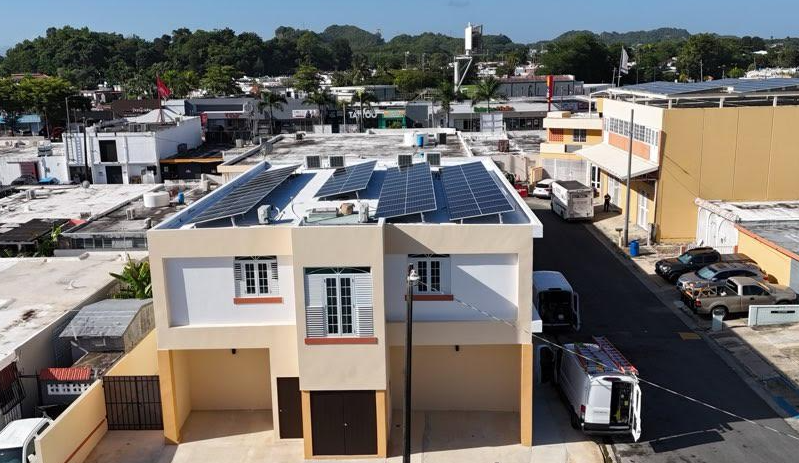
Three systems serve separate loads
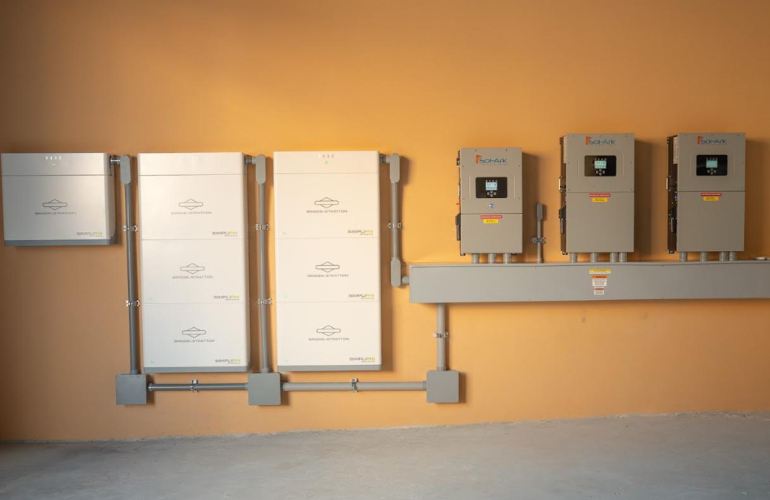
The installation can look like one three-battery array, but it consists of three independent systems. Each apartment has its own system, while a third battery serves four electric gates for the parking area and lighting in the building’s common spaces. The systems do not communicate with one another, and the building has no generator.
Each apartment system includes eighteen solar panels rated at 550 watts apiece and 19.8 kWh of battery capacity. Together, the panels provide 9.9 kW of rated solar capacity per apartment. The equipment has to support the substantial and varied demands of a home, including air conditioning, water heating, cooking, lighting and other everyday electrical loads.
The property occupies its entire lot, leaving no practical space for a generator. That physical constraint helped shape the design: separate systems provide power to each apartment and the shared equipment without relying on a central generator or a single battery serving every load. The separation also means the systems operate independently if one location has a problem.
After installation, the building ran in self-consumption mode for five months while waiting for electrical approval from Luma Energy. Fonseca said that, once meters were installed and the electrical certification completed, the building would be able to send electricity to the grid. The source does not give the expected amount of exported energy or describe how often exports will occur; those figures would depend on generation, household use and battery charging.
Charging and performance
Fonseca reported that the systems have kept the apartments supplied with electricity and that the batteries recharge in about 75 minutes when sunlight is plentiful. With less sun, he said, charging takes up to 150 minutes. These are reported operating times for this installation; the account does not specify the batteries’ starting charge, the conditions during each charging period or whether the times apply to a full recharge.
That distinction matters when judging what a solar-and-battery system can deliver. Solar panels generate electricity when sunlight is available, while batteries shift some of that energy to later hours or outages. Actual autonomy depends on the loads being used, the battery’s stored energy and the amount of solar generation. Fonseca’s account says the apartments have not run out of electricity, but it does not provide outage duration, household consumption data or seasonal performance.
The installation followed an earlier project for the same customer: a 30 kW three-phase backup system with 46 kW of batteries at the customer’s business. The customer’s familiarity with Fonseca’s work helped bring the apartment project to his company. Across the two sites, the examples illustrate how solar and storage can be configured for different building types and electrical needs.
Installer experience and wider use
Fonseca has worked with Briggs & Stratton for more than eight years and says he has completed about a dozen installations using the SimpliPHI 6.6 battery. He described the units as compact, light enough to handle easily and straightforward to install. He also pointed to a controller that can connect from either side, which he said makes installation more convenient.
Those comments reflect one installer’s experience, rather than comparative performance data across battery products. The source offers no independent figures on equipment life, efficiency, maintenance costs or performance across different temperatures and usage patterns. For property owners considering a similar setup, the practical questions are how much power must be sustained, where equipment can fit, and how the system will be configured for the building’s circuits.
Fonseca also described a customer who runs three air conditioners at night and, he said, has not needed a generator because the batteries handle the load. That example underscores how storage can cover electricity use after daylight ends, though results at another property would depend on its battery capacity, solar production and demand.
Fonseca plans to expand his installation business from Mayagüez to Fajardo and potentially to central Puerto Rico, including Naranjito and Aibonito. The Bayamón project offers a concrete model for buildings with limited outdoor space: allocate solar and storage to distinct household and shared loads, then assess performance against actual use and available sunlight.